Skip to content

Laboratory-grown diamonds

Know the facts.

Understand the science, examine common claims and make informed choices about laboratory-grown diamonds.

A brilliant-cut diamond resting on ivory silk

Two origins. One diamond crystal. Your choice.

Some diamonds are extracted from the earth by miners. Other diamonds are grown aboveground by creators. Both are diamonds. Only their origins differ.

Lab-grown diamonds are the modern way to experience diamond’s beauty and unique properties. They avoid mining and keep consumers’ money out of the hands of dictators.

DPC helps consumers assess the marketing claims they encounter and choose the diamond they want with confidence.

Myths & Truth

Myth 1Lab-grown diamonds are not real diamonds.
TruthA lab-grown diamond is diamond. Only its origin differs.“[Lab grown diamonds] are real diamonds.”Matthew Hall, Director, Gemological Institute of America (GIA)
“They have the same optical, chemical, thermal, and physical features.”

A lab-grown diamond is atomically and structurally identical to a mined natural diamond. They have the exact identical properties.

The only difference is whether a diamond was produced using modern equipment or extracted from earth using industrial mining.

They are indistinguishable to any jeweler. The only difference is their origin.

The U.S. Federal Trade Commission agrees – it revised its Jewelry Guides in 2018 and removed “natural” from the definition of diamond, recognizing that diamonds can also be grown in a laboratory:

“These [lab grown diamond] stones have essentially the same optical, physical, and chemical properties as mined diamonds. Thus, they are diamonds.”
— Federal Trade Commission, 2018 explanation of the revised Jewelry Guides FTC 2018 Jewelry Guides revision;

Lab-grown diamonds are not simulants such as cubic zirconia and moissanite, which may resemble diamond but are completely different materials. GIA: diamond simulants.

Misleading Marketing by Diamond Miners

According to a U.S. ruling, the diamond mining cartel engaged in deceptive marketing by using the word ‘real’ pertaining to lab grown diamonds in a derogatory way, suggesting they are not.

The National Advertising Division (NAD), the U.S. advertising industry’s self-regulatory body, criticized the Natural Diamond Council, now renamed to The Diamond Collective, for its use of the word real in certain marketing, as it might imply that lab-grown diamonds are not actual diamonds, something the Federal Trade Commission has said can be misleading.

The diamond miners’ marketing statements challenged by the NAD include:

  • “Today, there are many laboratory-grown and synthetic diamonds on the market. These are also made of carbon, but without the earthly origins of real diamonds, they lack the unique qualities infused by nature.”
  • “The difference between a real diamond and a lab-grown diamond is simple.… A real diamond is unique and rare, formed one hundred miles below Earth’s surface up to 3 billion years ago.”

The NAD advised that “In the context of NDC’s challenged advertising, consumers may incorrectly conflate LGDs like Diamond Foundry’s with imitation diamonds like moissanite and cubic zirconia, which do not share the same physical properties as mined diamonds.”

The NAD decision added: “The issue is not that Natural Diamond Council uses real as a term to describe its own mined diamonds; nothing in the FTC Jewelry Guides would flatly prohibit that use. The issue is that NDC uses real in a pointed manner to distinguish mined diamonds from LGDs.”

The U.S. National Advertising Division recommended that the Natural Diamond Council discontinue the implied claim that man-made diamonds are not "real" diamonds, and express claims that:

  • "Today, there are many laboratory-grown and synthetic diamonds on the market. These are also made of carbon, but without the Earthly origins of real diamonds, they lack the unique qualities infused by nature."
  • "The difference between a real diamond and a lab-grown diamond is simple . . . A real diamond is unique and rare, formed one hundred miles below earth's surface up to 3 billion years ago. Real diamonds undergo extraordinary environmental circumstances, bursting towards the earth's surface through volcanic eruptions. They are miracles of nature."
Myth 2Lab-grown diamonds are “synthetic”.
TruthCalling a lab grown diamond “synthetic” can be — and is often intended as — deceptive marketing, which is illegal. DPC recommends using unbiased terminology and giving consumers a true choice.

Synthetic is something different than a diamond produced in a lab. For example, a synthetic fiber is a different material than natural fiber, one created to simulate natural fiber. This may apply to diamond simulants but lab grown diamond is diamond, not an entirely different material like a diamond simulant.

Using the term “synthetic” to suggest a lab-grown diamond is not an actual diamond is deceptive according to the U.S. Federal Trade Commission.

In other words, while not generally illegal to use this adjective to describe a lab grown diamond, the actual practice of using it is usually inappropriately intended and deceptive. Deceptive marketing is illegal.

Consumers often confuse the term “synthetic diamond” with products such as cubic zirconia—which are not diamonds but completely different materials.

Of course, this confused and derogatory implication is exactly why this terminology is being promoted by the diamond miners and their marketing & industry associations including GIA and CIBJO. Consumers beware!

The diamond miners and their jewelry associations want to exploit and create exactly this confusion between lab grown diamonds and diamond simulants. This is why they are pushing for the use of the qualifier “synthetic”.

The U.S. Federal Trade Commission considered whether “synthetic” was an appropriate way to describe them. They considered evidence that consumers associated “synthetic” with fake or imitation products. Consumer research showed that 56% of consumers understood “synthetic diamond” to mean an imitation or fake. The FTC therefore posited that using the term “synthetic” to suggest a lab-grown diamond was not an actual diamond is deceptive.

The U.S. regulator has also appreciated the fact that synthesis requires multiple elements to be combined, which is plainly not the case with diamond growth.

CIBJO recently decided that “synthetic” should become the sole preferred international term. CIBJO is going further still. Its Diamond Commission has called for exploring “every way possible” to restrict use of the 4Cs to natural diamonds, potentially preventing lab grown diamonds from being described to consumers using the same familiar measures of carat, color, clarity and cut. CIBJO is clearly a pro-mining shop and does not represent the diamond industry at large.

DPC believes CIBJO is acting anti-competitively and harming consumers in the United States and worldwide.

DPC Advises Jewelers to Not Follow CIBJO

We advise jewelers and marketers to stop using “synthetic” for lab-grown diamonds because it confuses consumers about the distinction between diamonds and simulants.

CIBJO is not a government regulator. Its Blue Books are voluntary recommendations. CIBJO itself expressly states: “The application of the Blue Books’ standards is voluntary.”

A jeweler's legal obligations come from the laws and regulations applicable where it does business—not from CIBJO. CIBJO has zero legislative or regulatory authority over jewelers.

U.S. jewelers are subject to U.S. consumer-protection law. The Federal Trade Commission has accepted terminology including “laboratory-grown” and “laboratory-created,” removed “synthetic” from its examples of recommended qualifiers, and has warned that using “synthetic” to imply that a competitor's laboratory-grown diamond is not actually a diamond can be deceptive.

Jewelers should not confuse a CIBJO recommendation with a legal requirement—and should always follow the consumer-protection laws applicable in the market where they operate.

Related news: Diamond Producers Council advises jewelers and retailers to reject CIBJO’s “synthetics” recommendation.

Misleading Marketing by CIBJO and the Diamond Miners

The FTC is the U.S. government agency charged with protecting consumers and competition.

CIBJO, on the other hand, is a jewelry-industry organization whose members and committee participants have substantial commercial interests in natural diamonds.

The FTC asked what terminology could mislead consumers.

CIBJO's Diamond Commission is asking how the terminology and grading system can give natural diamonds a leg up on their lab-grown competitors.

When the two produce directly conflicting recommendations, people should understand whose standard they are being asked to follow.

In 2018, the U.S. Federal Trade Commission conducted an extensive review of the terminology used to describe diamonds. The natural-diamond industry participated. The predecessor of today's Natural Diamond Council/Diamond Collective submitted arguments. International standards, including CIBJO's own Diamond Book, were put before the Commission.

After considering the evidence, the FTC reached several conclusions. First, it removed the word “natural” from the definition of a diamond. Why? Because the old definition dated from an era when mined diamonds were the only diamonds commercially available. Laboratory-grown diamonds now have essentially the same optical, physical and chemical properties as mined diamonds.

The FTC's conclusion could hardly have been clearer: “Thus, they are diamonds.”

Second, the FTC considered whether “synthetic” was an appropriate way to describe them. Consumer research showed that 56% of consumers understood “synthetic diamond” to mean an imitation or fake. Consumers confused the term with products such as cubic zirconia—which are not diamonds. The FTC therefore removed “synthetic” from its examples of recommended qualifying terminology.

And it issued an important warning: Using “synthetic” to imply that a competitor's laboratory-grown diamond is not an actual diamond can be deceptive.

CIBJO has now taken precisely the opposite direction. In 2026, CIBJO decided to recommend “synthetic” as the sole international descriptor and to remove “laboratory-grown” and “laboratory-created” from its preferred Blue Book nomenclature.

The contradiction is striking. The FTC examined consumer evidence showing that “synthetic” can communicate fake diamond.

CIBJO examined the terminology and decided that “synthetic” should become the sole preferred international term.

CIBJO is going further still. Its Diamond Commission has called for exploring “every way possible” to restrict use of the 4Cs to natural diamonds, potentially preventing lab grown diamonds from being described to consumers using the same familiar measures of carat, color, clarity and cut.

This is no longer simply a debate about ensuring that consumers understand where their diamond came from. Everyone should support clear disclosure of origin.

The question is whether an industry organization should use nomenclature to make one category of genuine diamond sound artificial or fake—and then seek to prevent consumers from comparing that product with mined diamonds using the same familiar quality metrics.

Notice to the Jewelers

DPC reserves all rights to pursue legal remedies against jewelers, trade organizations and other market participants that use the term “synthetic” in a manner that misleads one or more consumers into believing that lab grown diamonds are fake, imitation diamonds, or are not diamonds. This applies to representations made in the United States and in other jurisdictions.

Where misleading representations cause consumers to purchase substantially more expensive mined diamonds instead of lab grown diamonds, DPC believes that the resulting consumer price premium may constitute a substantial economic injury and should be considered in assessing available damages, restitution, and other remedies.

DPC is evaluating potential claims, including claims capable of being pursued on behalf of affected classes of consumers, against market participants whose advertising or sales practices materially misrepresent lab grown diamonds.

Compliance with a voluntary CIBJO recommendation does not, by itself, immunize conduct from applicable consumer-protection, competition or advertising law.

Industry terminology cannot be used as a license to mislead consumers.

If you know of a consumer who was misled by a natural diamond marketer describing lab grown diamonds as “synthetics,” please notify us.

Myth 3Jewelers have to follow CIBJO.
TruthNo, they do not. CIBJO is a pro-mining shop, not a government regulator. Its Blue Books are voluntary recommendations.

CIBJO itself expressly states: “The application of the Blue Books’ standards is voluntary.”

A jeweler's legal obligations come from the laws and regulations applicable where it does business—not from CIBJO. CIBJO has zero legislative or regulatory authority over jewelers.

U.S. jewelers are subject to U.S. consumer-protection law. The Federal Trade Commission has accepted terminology including “laboratory-grown” and “laboratory-created,” removed “synthetic” from its examples of recommended qualifiers, and has warned that using “synthetic” to imply that a competitor's laboratory-grown diamond is not actually a diamond can be deceptive.

Jewelers should not confuse a CIBJO recommendation with a legal requirement—and should always follow the consumer-protection laws applicable in the market where they operate.

Diamond Producers Council Advises Jewelers to Not Follow CIBJO

We advise jewelers and marketers to stop using “synthetic” for lab-grown diamonds because it confuses consumers about the distinction between diamonds and simulants.

The Diamond Producers’ Council will initiate proceedings against jewelers who deceptively use “synthetic” pertaining to lab-grown diamonds.

Related news: Diamond Producers Council advises jewelers and retailers to reject CIBJO’s “synthetics” recommendation.

Notice to the Jewelers

DPC reserves all rights to pursue legal remedies against jewelers, trade organizations and other market participants that use the term “synthetic” in a manner that misleads one or more consumers into believing that lab grown diamonds are fake, imitation diamonds, or are not diamonds. This applies to representations made in the United States and in other jurisdictions.

Where misleading representations cause consumers to purchase substantially more expensive mined diamonds instead of lab grown diamonds, DPC believes that the resulting consumer price premium may constitute a substantial economic injury and should be considered in assessing available damages, restitution, and other remedies.

DPC is evaluating potential claims, including claims capable of being pursued on behalf of affected classes of consumers, against market participants whose advertising or sales practices materially misrepresent lab grown diamonds.

Compliance with a voluntary CIBJO recommendation does not, by itself, immunize conduct from applicable consumer-protection, competition or advertising law.

Industry terminology cannot be used as a license to mislead consumers.

If you know of a consumer who was misled by a natural diamond marketer describing lab grown diamonds as “synthetics,” please notify us.

Myth 4A jeweler can identify a lab-grown diamond just by looking.
TruthJewelers cannot reliably distinguish lab-grown from mined diamonds by sight alone.

Lab-grown and mined diamonds are atomically identical and have the identical optical properties that make diamonds sparkle.

A jeweler’s eyes can assess a stone’s appearance and quality but that is different from telling its atomic structure and how it formed.

GIA says traditional observations and instruments are not enough to distinguish many laboratory-grown diamonds from mined ones and advanced testing may be needed.

Specialized laboratory testing can distinguish lab-grown from mined diamonds. A polished diamond’s mining country cannot be established by examining the stone alone; documented provenance is needed.

Myth 5Lab-grown diamonds are all identical copies.
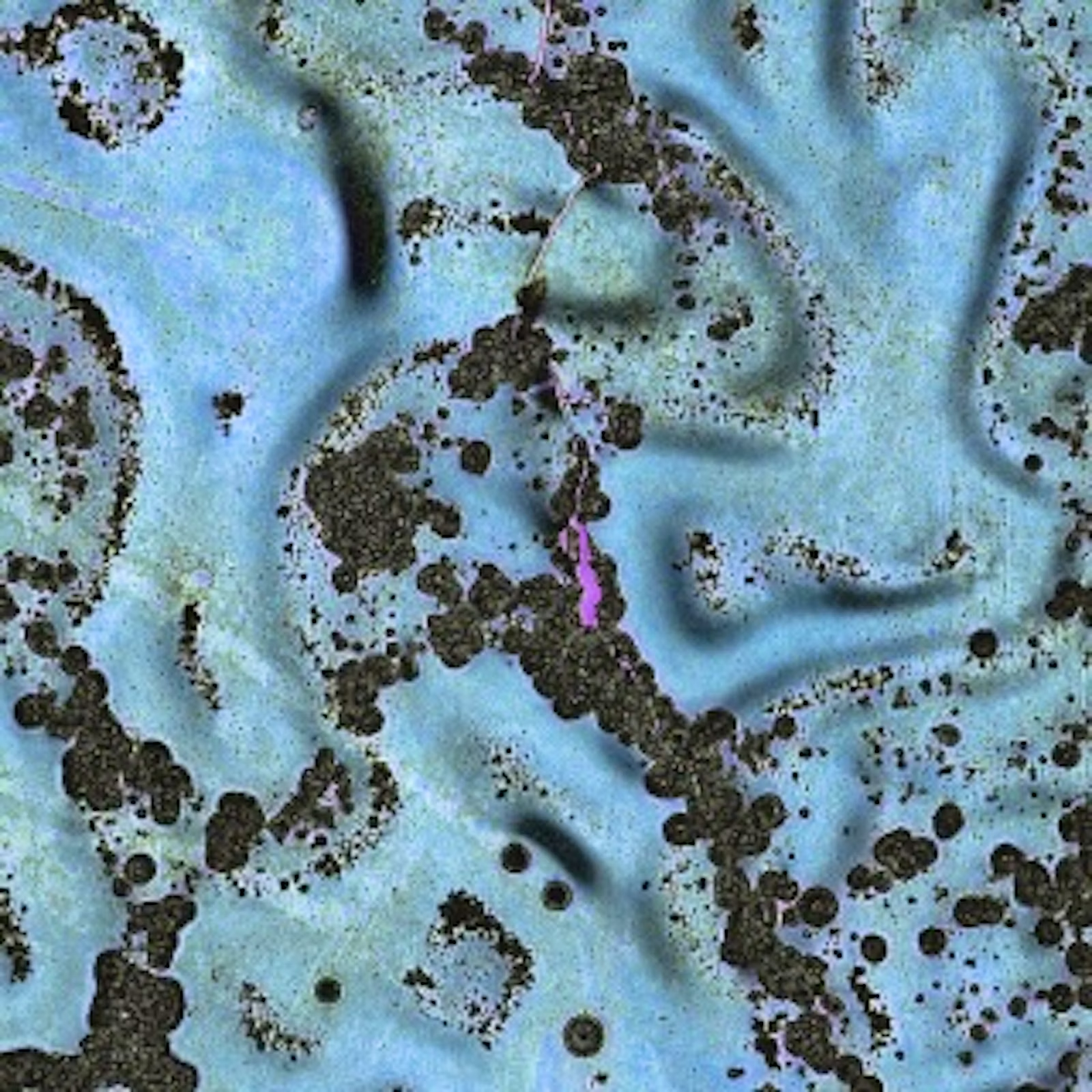
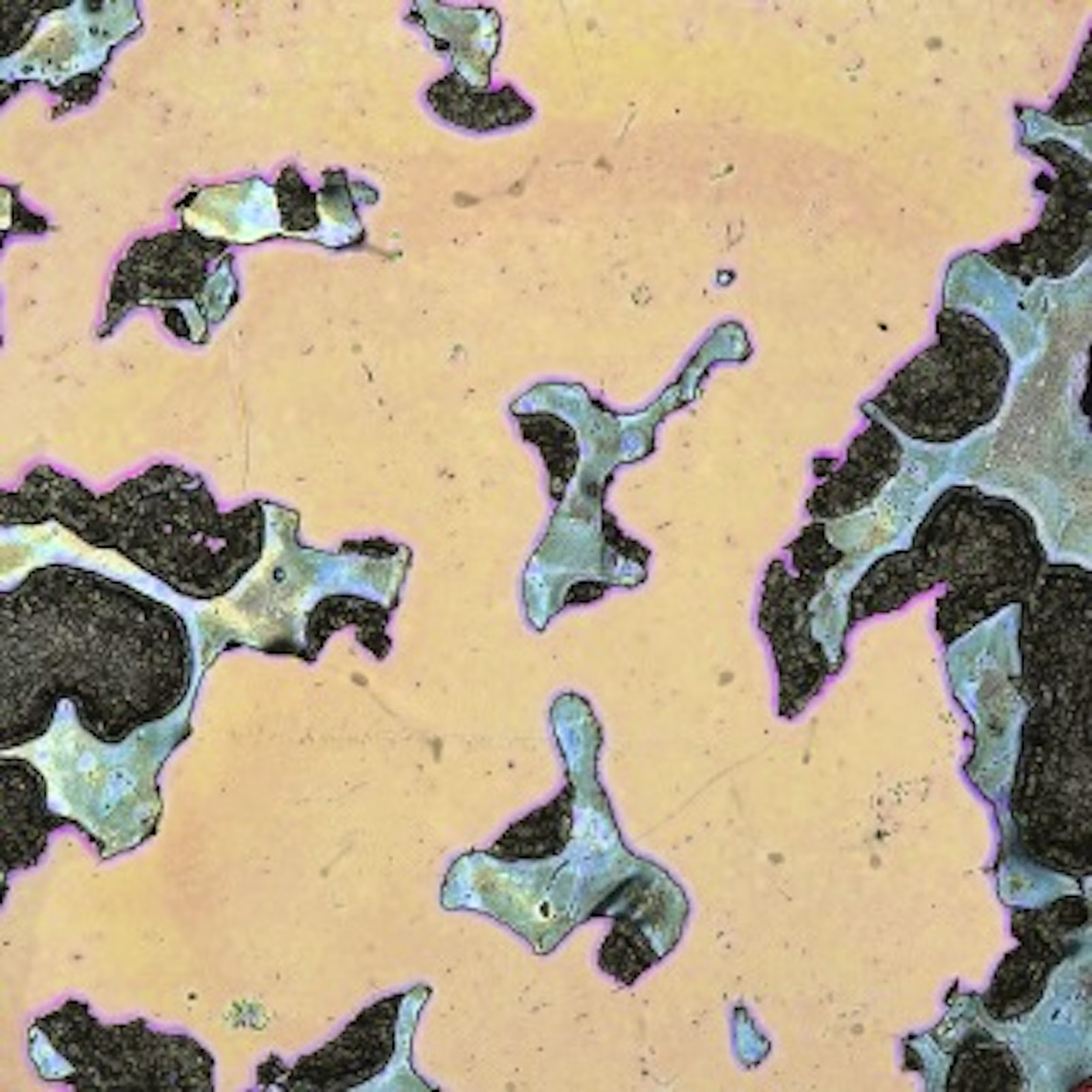
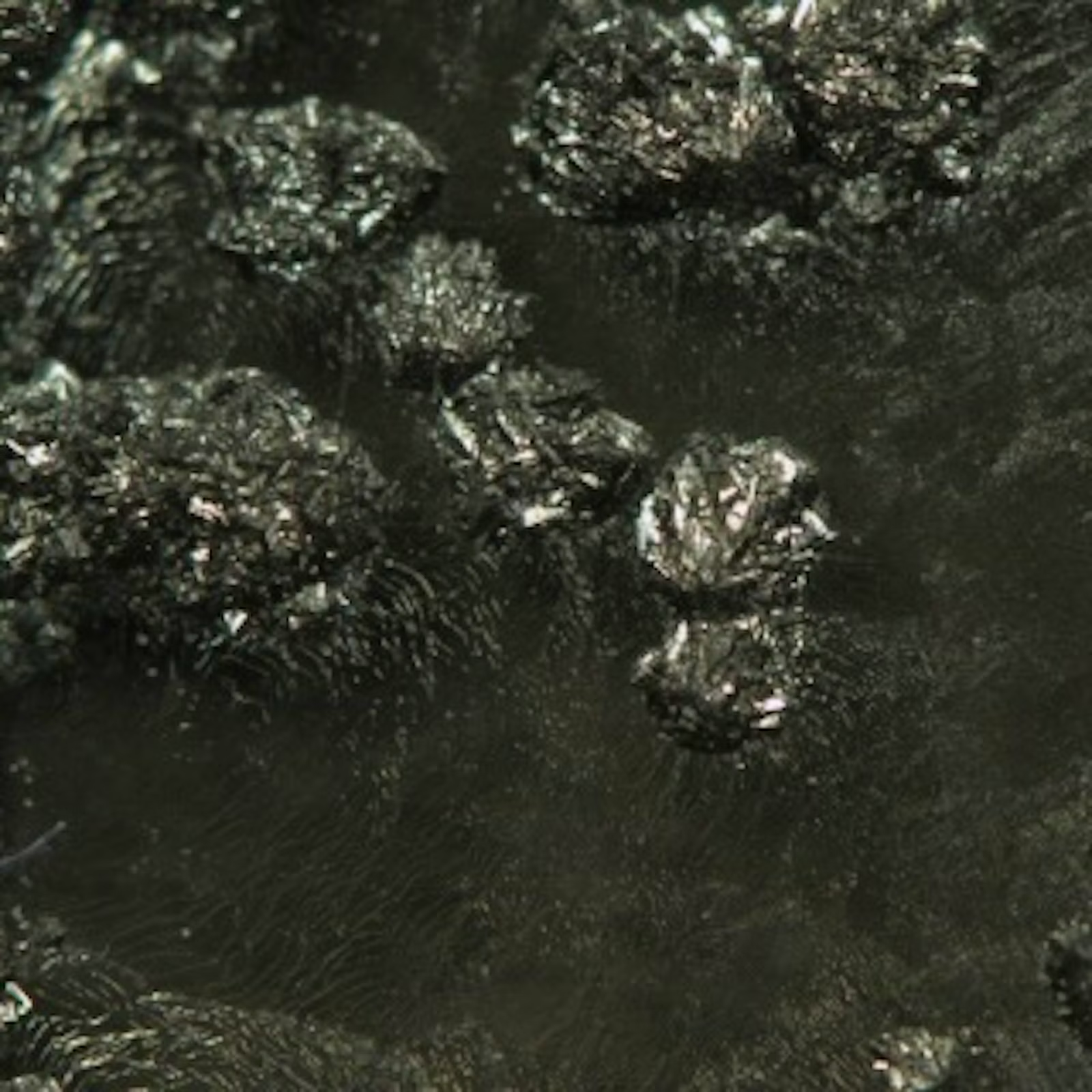
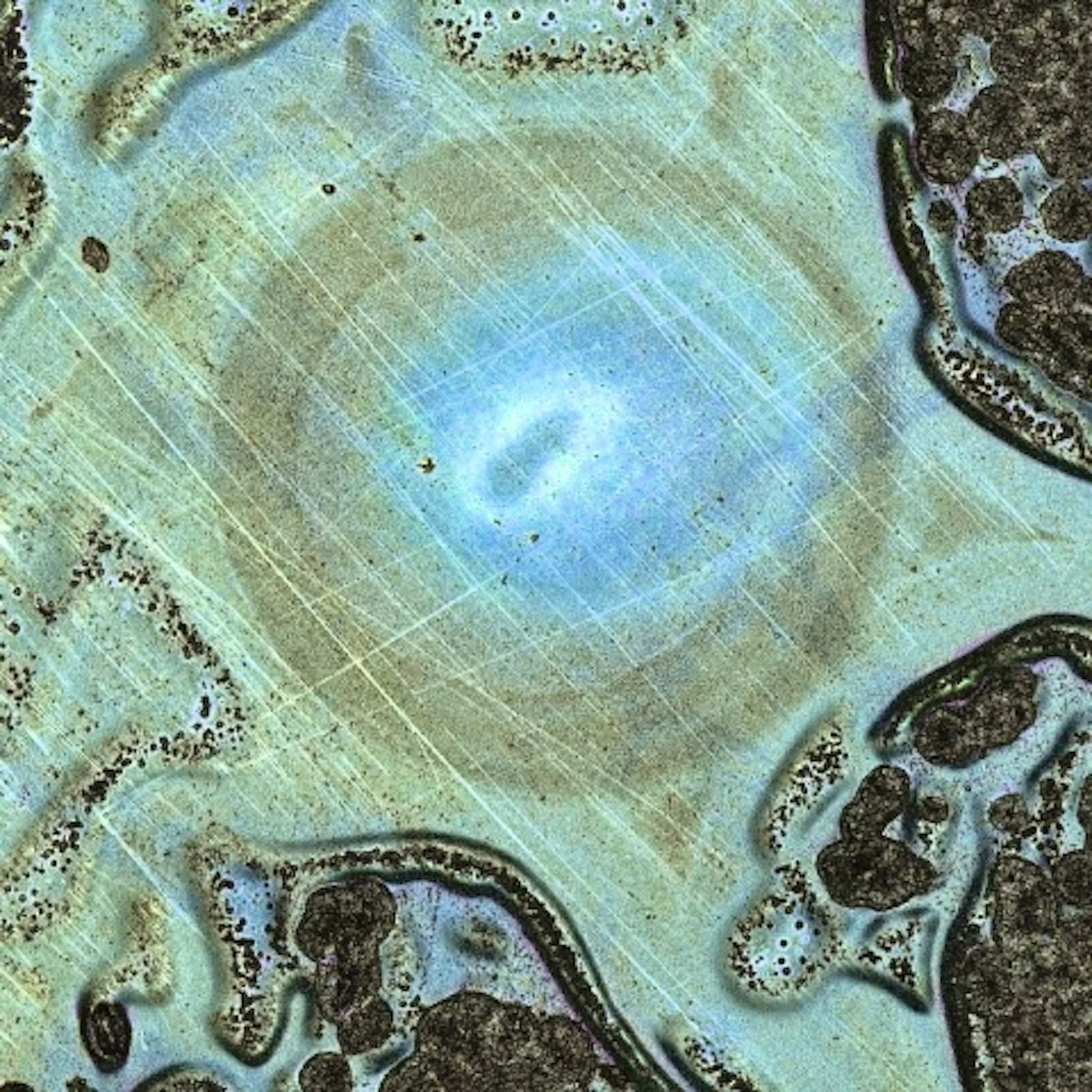
TruthEach lab-grown diamond is unique. Growth patterns and microscopic inclusions vary from stone to stone.
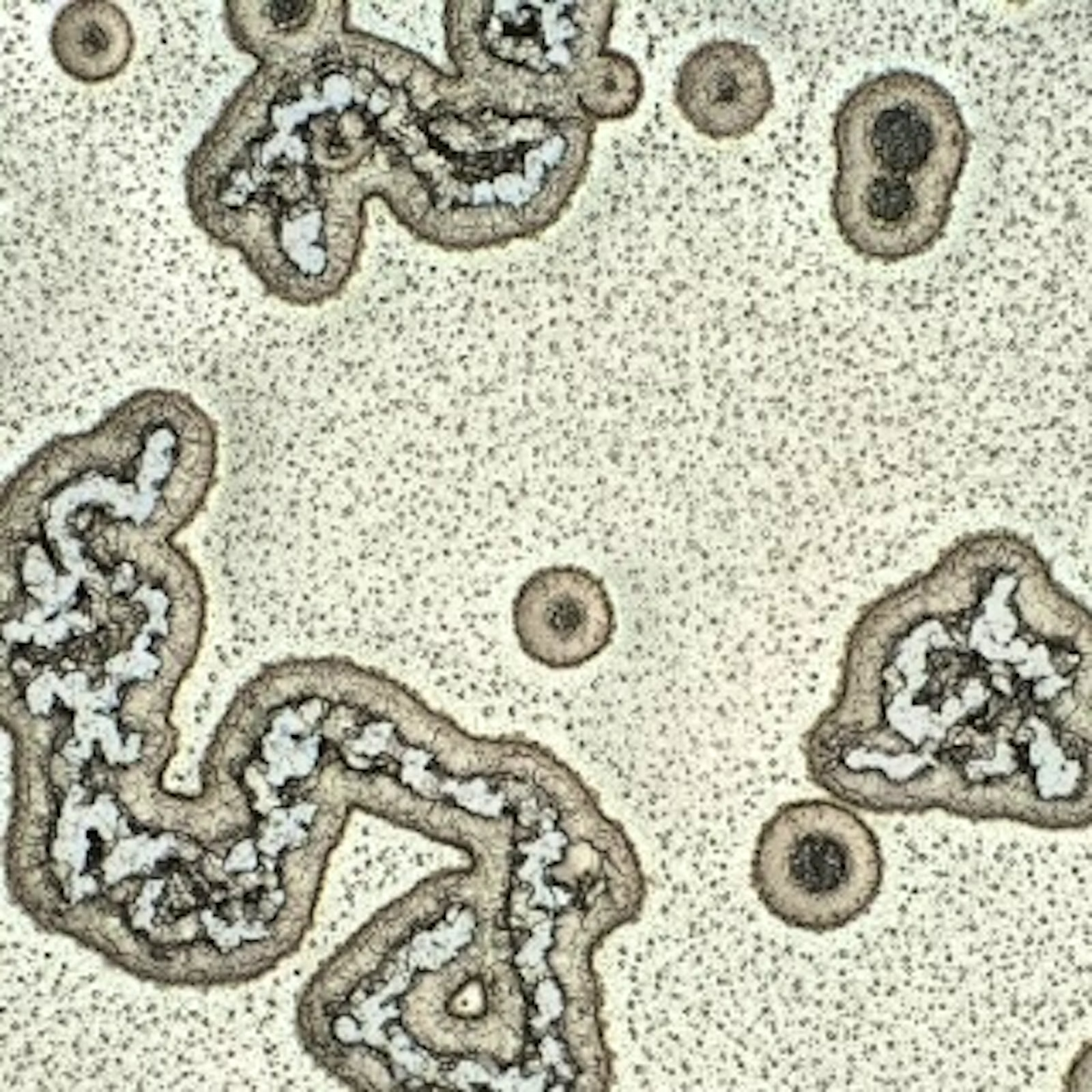
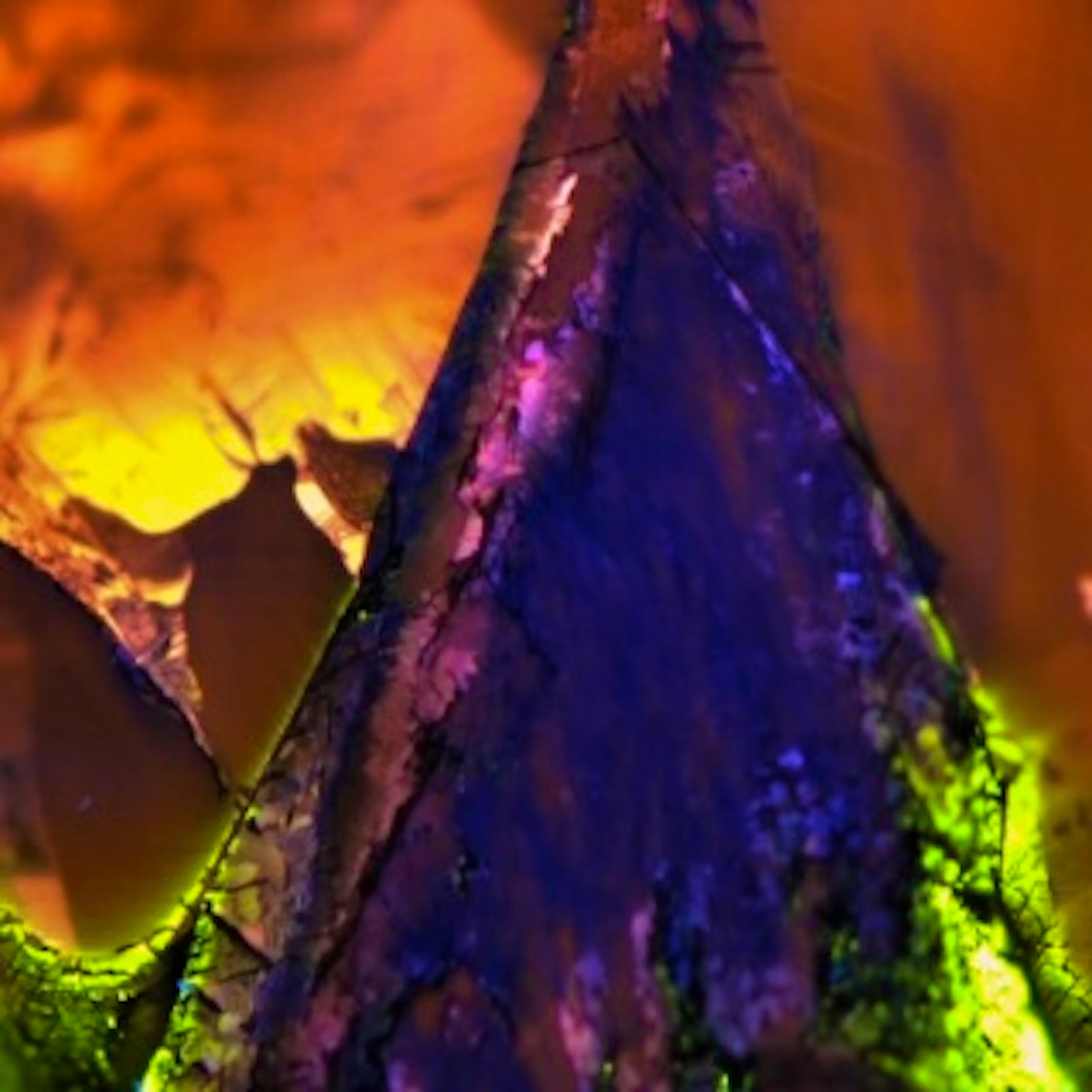
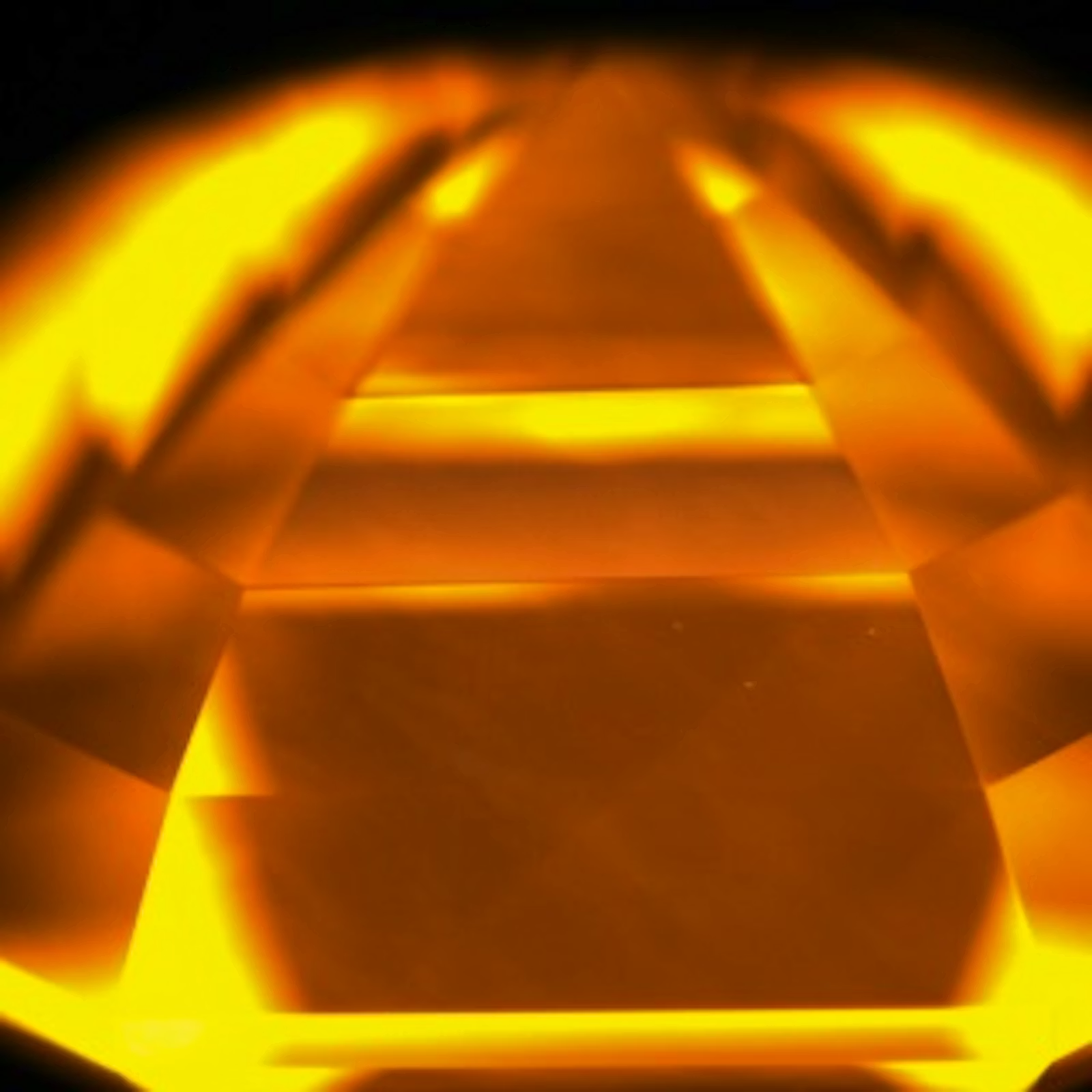
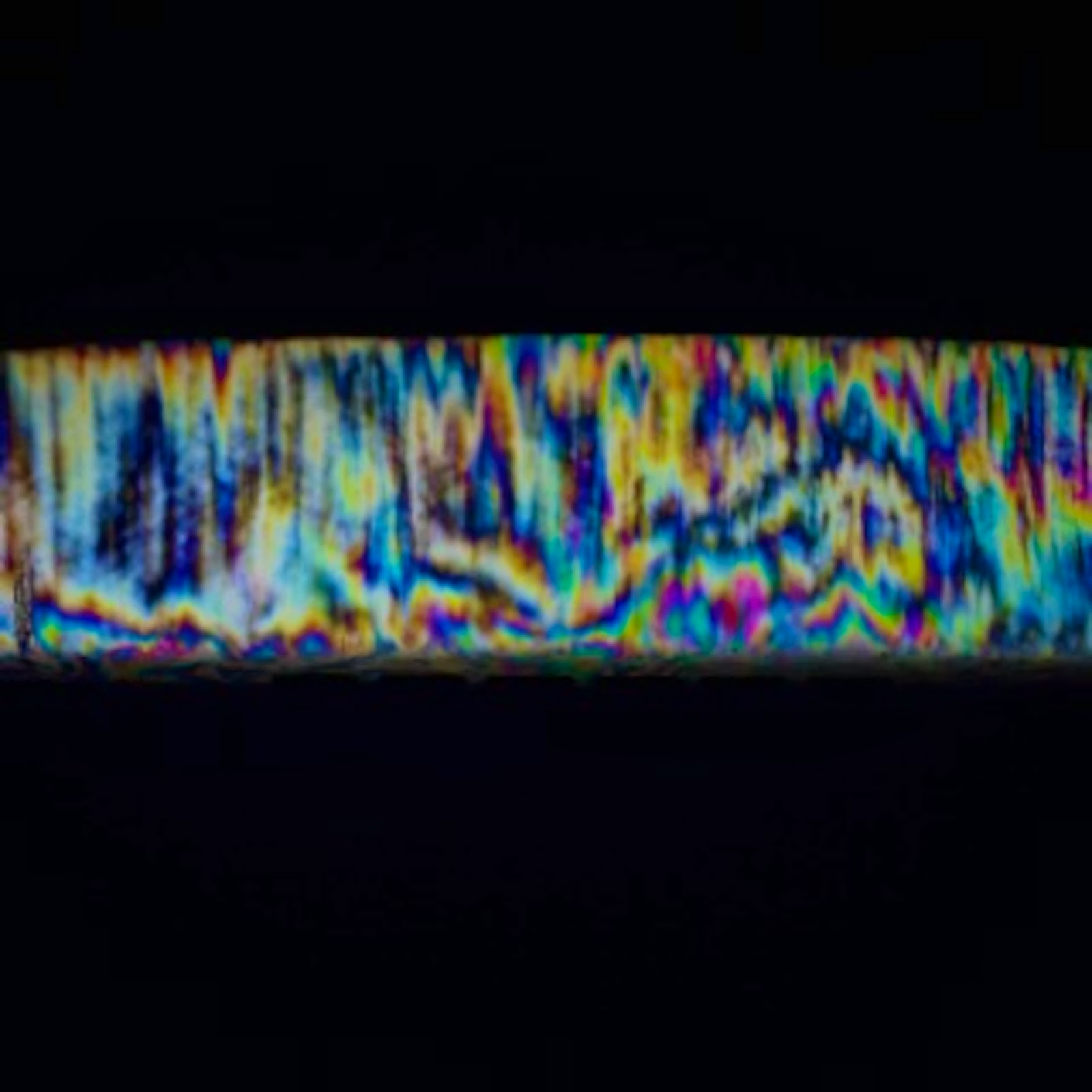
Gallery of diamond growth visuals our scientists & engineers see every day:
An abstract, textured surface featuring pale blue hues with irregular, jagged edges highlighted in vibrant purple, blue, and black.An abstract, textured surface featuring pale yellow and beige hues with irregular, jagged edges highlighted in vibrant purple, blue, and black.A close-up photograph of a dark mineral, showing bumpy, rounded clumps with many shiny, reflective facets.A high-contrast, black and white micrograph showing clustered biological or geological structures.Diamond growth visual 5An abstract, textured surface featuring pale yellow and beige hues with irregular, round edges.An abstract, textured surface featuring pale yellow and beige hues with irregular, jagged edges highlighted in vibrant purple, blue, and black.An extreme close-up view of a material surface showing a sharp boundary between two distinct textures.An abstract image with a mix of red and blue.An extremely close-up image of a colorful mineral or rock.A close-up image of a diamond with an orange light shining through it.An abstract pattern with vibrant, swirling colors.

VRAI — Each Unique

Myth 6Natural diamonds retain their value, have better resale value than lab diamonds.
TruthNAD found the Natural Diamond Council’s challenged resale-value claims unsupported.

The diamond mining cartel controls pricing for mined natural diamonds whereas lab diamond prices are competitively priced in a competitive producer market. The lack of cartel pricing control is the sole reason why lab diamonds cost less.

The claim of retention of value is wrong in two profound ways:

  • Retail vs wholesale prices. The statement suggests that it is a good investment to buy a mined natural diamond but retail prices alone are a factor above wholesale (repurchase) prices, so consumers will lose 80% of what they spent just based on the difference between retail and wholesale pricing. It is disingenuous for any jeweler or marketer to suggest that buying diamonds at retail pricing is an investment and of good value.
  • Wholesale prices for natural diamonds have been in free fall. The wholesale market pricing for natural diamonds has dropped to half.
  • September 2021$8,007
  • September 2026$3,898

About 51% lower. Rapaport Group data, as reported by InvestmentNews on September 28, 2026.

InvestmentNews — Diamonds may not be forever, at least in value terms

According to data from Rapaport Group, the diamond trading platform, a standard one-carat stone averaged $8,007 in September 2021. By September 2026, that figure had fallen to approximately $3,898; a decline of 51% in just five years. The Diamond Standard Index, which tracks investment-grade diamonds, hit its lowest level on record in early August 2026, hovering just above 2,500.

Misleading Marketing by Diamond Miners

NAD found the Natural Diamond Council’s challenged claims about mined diamonds’ scarcity and relative resale value unsupported.

The National Advertising Division (NAD), the U.S. advertising industry’s independent self-regulatory body, asked the Natural Diamond Council, which has now renamed itself to “The Diamond Collective”, to stop making certain claims regarding mined diamonds’ scarcity and resale value.

NAD recommended that the Natural Diamond Council discontinue certain claims about the resale value of lab-grown gems; among the claims that the NAD frowned upon:

  • “Laboratory created diamonds are currently sold at a slightly reduced price compared to natural diamonds, but the cost continues to decline due to mass production.… Therefore, they have little to no resale value.”
  • “A laboratory created diamond has no resale value and its price is falling rapidly.”
  • “[M]ass-produced lab-grown diamonds are sold at comparable prices, but have little to no resale value because they can be endlessly replicated.”

The NAD wrote that the submitted evidence “does not provide a reasonable basis for claims about man-made diamond’s and natural diamond’s respective resale values, especially claims that man-made diamonds have ‘little or no resale value.’”

Myth 7Lab-grown diamonds are not better for the environment.
TruthLab diamonds are hands-down better for the environment, or to quote one expert:“if the battles will be played on ecological fields, ‘natural diamonds’ have practically no chances.”Sergey Goryainov, Rough & Polished, 15 June 2020

The lab grown diamonds from the leading producers in the world are today created with zero-emission energy, with a “real zero” carbon footprint. There is no mining operation that can get even close to achieving this.

Mining disturbs land, habitats and water systems. Much of the worst Diesel energy is used to mine diamonds – and a lot of it. Extracting diamond from earth using mining uses up to ten times as much energy as producing diamond in a lab.

Growing a diamond does use electricity but the largest diamond growers now have ever more energy efficient equipment – ten times better than just several years ago – and are using zero-emission energy for a zero carbon footprint.

Rows of green orchards beside a wide blue river, with buildings and dry hills beyond.

Image: Diamond Foundry’s Wenatchee, USA diamond growing lab is situated in America’s apple orchard capital and powered 100% by the energy from the Columbia River.

Creating Diamonds Aboveground Takes Much Less Energy, Less Water

Conventional wisdom would suggest that creating a diamond aboveground takes a lot more energy than extracting an underground diamond that Earth has already created.

After all, diamond is created using intense amounts of temperature or pressure — so once formed, it should not take so much energy to harvest it.

It turns out it takes an entire factor more energy to extract an underground diamond from Earth than it takes to create one aboveground in a foundry.

On top of this, the energy used in mining is generally dirty Diesel versus renewable energy in our above-the-ground production.

The amount of energy required for underground mining is somewhat surprising — and a testament to how far innovation in aboveground diamond production technology has progressed over the years as well as how inefficient mining of underground diamonds tends to be, having to move huge quantities of soil in often highly remote areas.

Natural diamond mining is easily ten times worse than technological production just based on raw numbers -- and cannot compete with the zero carbon footprint achieved by leaders in technological innovation through 100% use of renewable energy.

The Facts: kWh per Carat Consumption is Much Lower for Lab Grown

Diamond mines operated by De Beers consume an average of 80.3 kWh per rough carat. The Canadian Diavik mines consume 66 kWh per rough carat. [1, 2, 3]

Each of these is an entire factor higher than what creating a diamond in a laboratory takes using the best available modern technology.

Diamond-growing technology has come a long way from its early days. Unlike mining technology, diamond-growing technology is on a semiconductor technology curve, with improvements happening every single quarter.

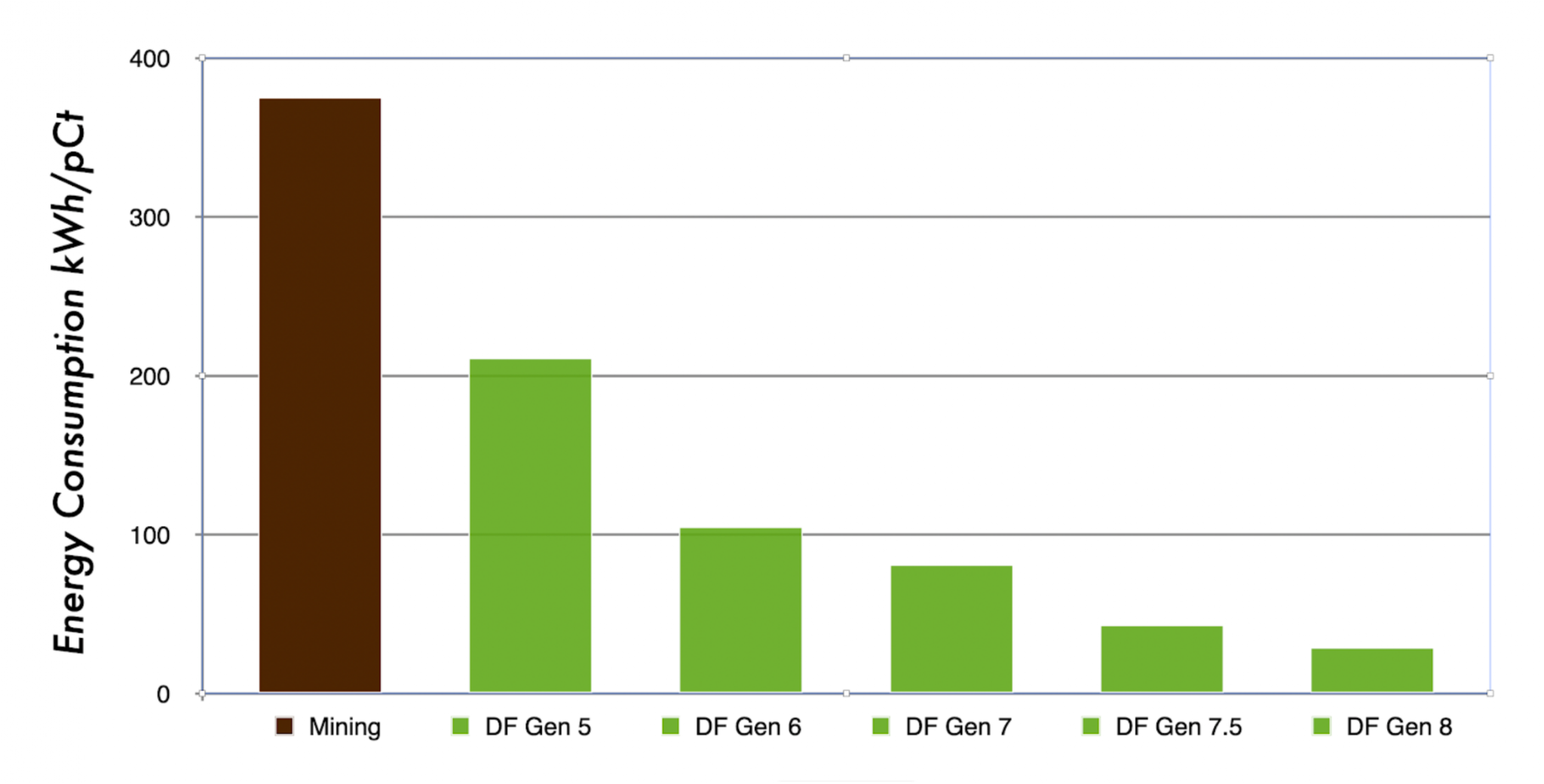
Energy consumption bar chart in kWh per polished carat, comparing mining with DF generations 5, 6, 7, 7.5, and 8.

The chart above starts with the reference disclosed by the Natural Diamond Council’s TruCost study that S&P Global was paid to create for the energy required per polished carat for natural diamonds. (Note that the Ali reference in Bates (2019) warns specifically that mining companies generally do not give the full picture, not accounting for the costs of exploration and transportation to the often isolated mine sites.)

The sheer amount of energy involved being so high for mining speaks to the fact that mining is very hard work — it requires moving hundreds of tons of soil for the hope of finding some good carats, etc.

The chart then shows the earliest plasma reactor technology used in growing diamond in a lab had a technological capability of about twice as good an energy efficiency as the level of mining. Then though each subsequent reactor technology generation improved on this further, and today’s technology is more than ten times as efficient as what the TruCost study describes diamond mining requires. (Approximately half of this energy – or as little as 14kWh per carat with the most advanced generation of reactors – is used for the actual diamond growth.)

The Misleading Argyle Metric: The number touted often by the mining industry is the Australian Argyle mines at 7.5 kWh per carat. That’s significantly lower than the other mines — but the material produced in these mines tends to be lower quality rough as well. Primarily though, mining ended in 2020 with the mine in Western Australia completely shut down.

The Facts: High Carbon Emissions versus Renewable Power as Energy Used

Then the type of the energy used is very different of course: Mining in remote areas tends to require the use of Diesel generators whereas diamond foundries can be located in areas where they use solar power and other renewable sources of electricity.

This means that regardless of their energy consumption, foundry diamonds can be sustainably created whereas mined diamonds have a very large carbon footprint.

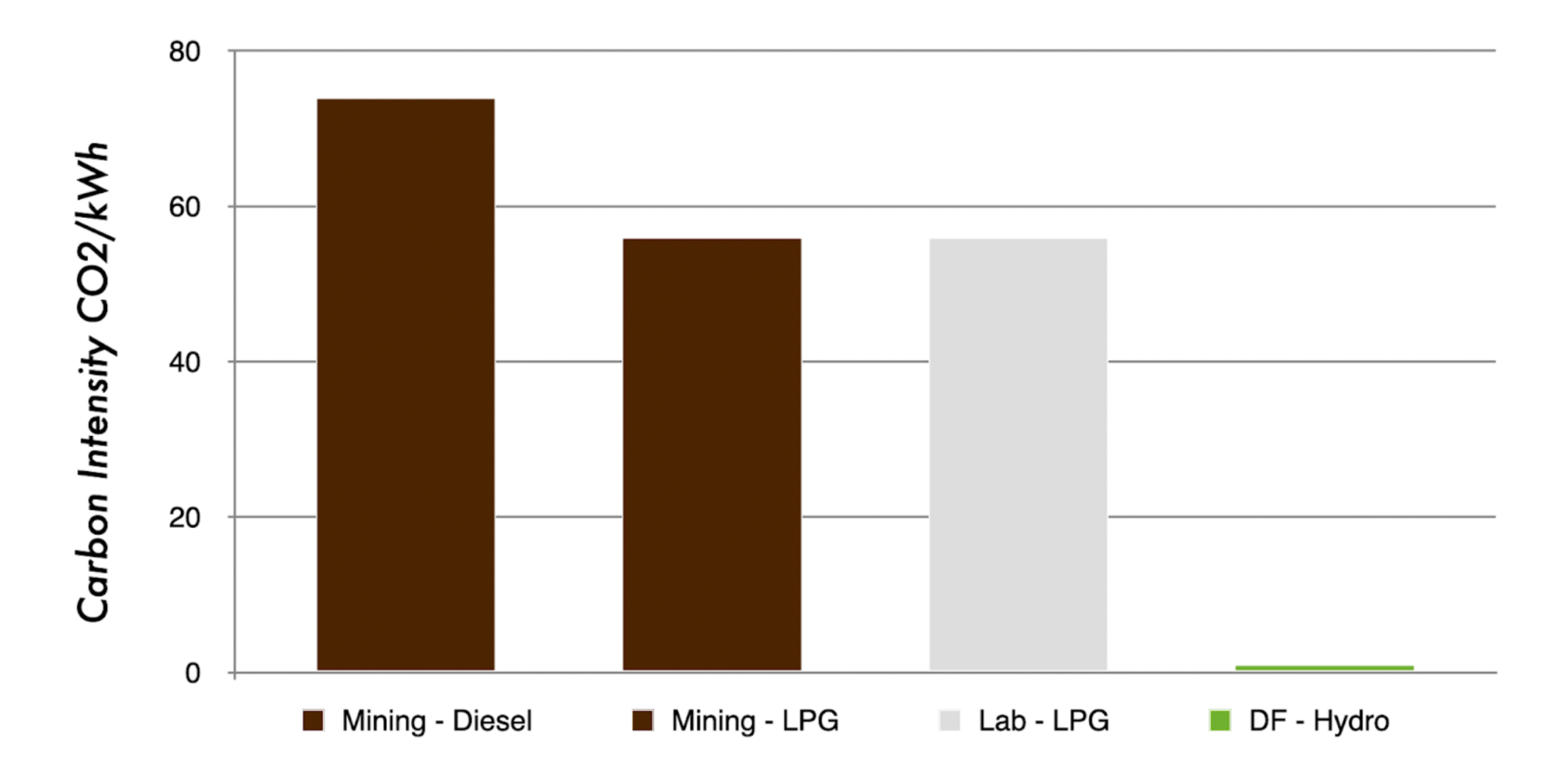
At lab producers using zero-emission energy, there are simply no emissions. So the carbon intensity factor is zero and thus the total product is zero as well. For illustration completeness, we include the chart showing how much less zero is than Diesel and Natural Gas emissions per energy unit: infinitely less so.

Bar chart comparing carbon intensity for Mining–Diesel, Mining–LPG, Lab–LPG, and DF–Hydro; DF–Hydro has the lowest bar.

Zero is of course hard to beat with any number any day.

Could mining come anywhere close? Difficult because mines tend to exist in remote regions where renewable energy is hard to do. There might be press photos with wind energy farms in sub-zero Canadian regions. But the fact is, mining tends to use the worst kind of form of energy, diesel generators, with the worst kind of emissions per energy unit consumed.

So, hands-down a lab producer with renewable energy production would win; there is no chance that a miner could even compete.

The Fact: Total Environmental Footprint

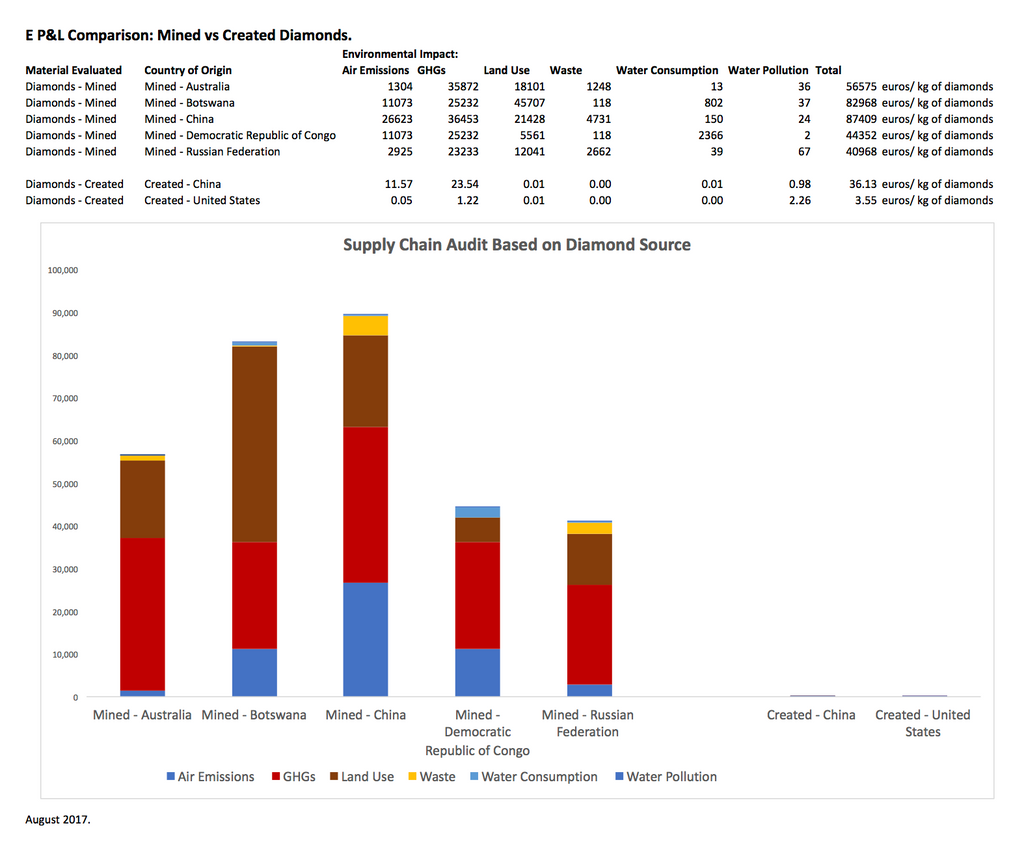
An independent audit conducted on the total environmental footprint of various diamond mines and foundry producers shows how vastly more environmental above-the-ground "mining" (in a foundry) is relative to underground mining:

Environmental profit-and-loss table and stacked bar chart comparing mined and created diamonds by country across six environmental impact categories.

Misleading Marketing by Diamond Miners

The diamond mining cartel represented by the Natural Diamond Council, now renamed to “The Diamond Collective”, basically lied through its teeth on environmental impact and successfully confused the public – in ways that even pro-mining advocates called quixotic.

Just as recently as 2021, the Natural Diamond Council / The Diamond Collective promoted overtly false claims with the help of “pay to play” paid outlets including Boston Consulting Group and S&P Global.

This follows an age old media strategy to seed confusion in public where the truth does not look good.

The natural diamond miners paid S&P Global to fabricate a false environmental impact study that achieved a media reach with its false information to more than 350 million consumers worldwide. It created a ton of confusion. Journalists to this day are confused themselves.

Among the numerous false claims, the S&P Global study claimed an amount of energy used for man-made production is very high – at a cost that would even exceed the market price for diamonds produced (!).

The reception of S&P Global’s TruCost study was weak to start with even among strident supporters of mined diamonds. For example, one industry analyst states how “comic” the study is:

And if the battles will be played on ecological fields, "natural diamonds" have practically no chances. A recent comic "study" conducted by Trucost ESG Analysis commissioned by DPA, during which synthetics producers were allegedly "caught" in generating some exorbitant CO2 emissions, clearly demonstrated the fighting power of advocates defending the position of natural diamonds. If DPA (now NDC) considers this as a serious argument, then the result of hostilities may be very sad for the “natural partisans”.
Sergey Goryainov, Rough & Polished, 15 June 2020

Similarly, Saleem Ali, Professor of Energy and the Environment, University of Delaware, stated: “Their estimates on greenhouse gas emissions and energy usage are very questionable. To claim that their carbon and energy footprint is less than synthetic . . . defies common sense.”

The U.S. Ruling: Diamond Miners Engaged in Misleading Marketing

In 2021, the National Advertising Division (NAD), the U.S. advertising industry’s independent self-regulatory body, found that diamond miners claiming that lab-grown diamonds cause three times the carbon emissions of mined diamonds was not backed by any reliable evidence. It also found that the broader implied claim of overall environmental superiority made by miners was unsupported by any evidence.

The decision determined that the carbon-emission comparison in the Trucost study contained “several flaws.”

First, it did not collect data directly from the leading lab-grown manufacturers and relied on “second and third-hand” information.

“[Mining c]ompanies providing information directly to Trucost had the ability and opportunity to vet such data while [lab-grown] manufacturers likely did not have any input on certain information as it was conveyed through second and third-hand sources, or the opportunity to correct for faulty assumptions,” the NAD said.

The NAD also found that the report used old data, and failed to note some lab-grown companies now use renewable energy. Its calculations also excluded “significant stages of the mining process,” including exploration, mine closure, and cutting and polishing, the group said.

In addition, “NAD was concerned that [such] claims conveyed a broader implied message about the overall environmental benefits of mined diamonds versus man-made diamonds, a message that was not supported,” it said.

Myth 8Lab-grown diamonds all come from coal-powered factories in China and India.
TruthA large fraction of all gem grade diamonds are produced outside of China and India. Plus the leading producers of lab grown diamonds are now using zero-emission energy for a zero carbon footprint.

Lab diamond producers have achieved ever more energy efficient technology – an order of magnitude less energy required per carat today than ten years ago.

(Most diamond grit / powder is indeed produced in China. But large diamond crystals are being produced all around the world including Europe and the United States.)

There has been little progress in making mining more energy efficient.

Jewelry brands such as VRAI exclusively source rough diamond grown in America with zero-emission energy so their marketing can highlight one exact place of origin.

Misleading Marketing by Diamond Miners

The diamond mining cartel likes to get journalists to mention lab diamonds being all Chinese and Indian because that’s what consumers associate with low cost and low quality and floods of volume.

As a matter of fact, Africa is more foreign to American consumers than India; African autocrats are anything but democracy in India; and the largest producers of gem size diamonds are not based in China or India but in the United States and Europe.

Myth 9Mining does good for local communities.
TruthIt largely enriches corrupt officials and exploitative owners.
Mining activities result in an
"extraction of wealth from land that paradoxically does not produce wealth for the local populations who remain poor."
His Holiness Pope Francis

Economic Inequity and Corruption

  • Wealth outflow: The billions of dollars generated by diamond sales typically benefit international traders, large corporations, and corrupt officials rather than the local workers who extract the stones. [1, 2]
  • Low pay and debt: Artisanal and small-scale miners often work in hazardous conditions for meager wages, sometimes trapped in cycles of debt bondage and poverty. [1, 2]
  • Broken promises: Local governments and mining companies frequently fail to deliver legally required compensation, infrastructure investments, or community development funds. [1, 2]

Environmental and Community Destruction

  • Water contamination: Heavy processing uses vast amounts of water and pollutes local rivers and groundwater with toxic runoff, destroying safe drinking and farming supplies for residents. [1, 2]
  • Loss of livelihood: Clearing forests and land for mining destroys traditional hunting grounds, sacred ancestral sites, and agricultural land, stripping communities of their food sources. [1, 2]
  • Long-term hazards: Abandoned mine pits fill with stagnant water after operations cease, creating breeding grounds for malaria and leaving lasting ecological scars. [1]

Related: How the wealth from Sierra Leone’s diamonds fails to enrich local communities

Myth 10Sustainable diamond mining is possible. Earth extraction of diamonds is romantic. Mining does not have a major environmental footprint.
TruthDiamond mining is a vast industrial scale operation that is anything but romantic.“Few industries in the world have a larger environmental and social footprint than mining.”Michael J. Kowalski, fmr CEO of Tiffany & Co.

Mining disturbs land, habitats and water systems in massive ways.

Mining is by definition depleting a natural resource, that is, not sustainable by its very definition:

“of, relating to, or being a method of harvesting or using a resource so that the resource is not depleted or permanently damaged”
Merriam-Webster’s definition of “sustainable”

Miners make the claim for greenwashing.

Then if not industrially mined, it is “artisanal mining” – but this is then generally slavery and work performed in remote sites under armed control.

Even the most benign mining site must unearth 250 tons of ore for a single carat of diamond.

Just recently De Beers killed 18,403 fish by draining an entire lake to access diamonds in a Canadian diamond mine.

Diamond Produced in a Lab:

Rows of green orchards beside a wide blue river, with buildings and dry hills beyond.

Nestled among the apple orchards of America's beautiful Pacific West, Diamond Foundry is crystallizing greenhouse gas into rough diamond using zero-emission river energy.

No fish left behind

The hydro power dam that powers Diamond Foundry has a salmon ladder so each salmon can bypass it.

Water flows down a curved, stepped fish ladder through landscaped greenery beneath a rocky hillside.

Diamond Mining:

Yellow haul trucks carrying earth along a dusty road through an open-pit mine.

There is nothing romantic about mining.

Mining has a vast environmental footprint. It also supports questionable governments.

Killing 18,403 fish

De Beers drained an entire lake to mine for diamonds below it, killing 18,403 fish. Source: WSJ.

Aerial photograph of terraced open-pit mines, access roads, and buildings in a landscape dotted with lakes.
Myth 11A diamond is a billion years old and therefore valuable.
TruthThe water in the oceans is billions of years old, yet not so valuable.Diamonds form very quickly in earth, are then just stuck there for a long time.It is deceptive marketing to use this to suggest lab diamonds are not just as real.

Old does not mean valuable.

The water in the oceans is billions of years old (and indeed even older than any diamond). Yet ocean water is not so valuable. Age alone does not make anything rare or valuable, and it does not make a diamond a good investment.

Being old is different from taking a long time to grow.

A diamond that formed billions of years ago did not spend billions of years growing.

There is a difference between the period during which a crystal grew and the much longer time it could then spend just stuck in the ground.

The impression of a diamond slowly becoming more valuable with every passing year is a sales story – and a false one. Indeed diamond forms in earth very rapidly via a quenching process, as fast often as 45 minutes.

Indeed, a natural diamond formed 1000x faster than one gently grown in the lab.

Misleading Marketing by Diamond Miners

According to a U.S. ruling, the diamond mining cartel engaged in deceptive marketing by suggesting that because lab diamonds were not formed billions of years ago that they are not ‘real’ or have less value.

The National Advertising Division (NAD), a quasi-regulatory agency in the USA, objected to and reprimanded the Natural Diamond Council, now renamed to The Diamond Collective, for implying that lab-grown diamonds are not actual diamonds, something the Federal Trade Commission has said can be misleading.

The diamond miners’ marketing statements challenged by the NAD include: “The difference between a real diamond and a lab-grown diamond is simple.… A real diamond is unique and rare, formed one hundred miles below Earth’s surface up to 3 billion years ago.”

The NAD advised that “In the context of NDC’s challenged advertising, consumers may incorrectly conflate LGDs like Diamond Foundry’s with imitation diamonds like moissanite and cubic zirconia, which do not share the same physical properties as mined diamonds.”

The U.S. National Advertising Division recommended discontinuing an ad contrasting “real” diamonds formed up to 3 billion years ago with lab-grown diamonds said to lack nature’s “unique qualities.” In that context, the contrast implied lab-grown diamonds weren’t real diamonds. The ruling recommended that the Natural Diamond Council discontinue the implied claim that man-made diamonds are not "real" diamonds, and express claims that:

  • "Today, there are many laboratory-grown and synthetic diamonds on the market. These are also made of carbon, but without the Earthly origins of real diamonds, they lack the unique qualities infused by nature."
  • "The difference between a real diamond and a lab-grown diamond is simple . . . A real diamond is unique and rare, formed one hundred miles below earth's surface up to 3 billion years ago. Real diamonds undergo extraordinary environmental circumstances, bursting towards the earth's surface through volcanic eruptions. They are miracles of nature."
Myth 12Natural diamonds are “conflict-free”. Diamond mining supports Western values and democracy.
Truth“Despite years of efforts, the [diamond mining] industry is still tainted by war, human-rights abuses and child labor.”TIME coverDiamond mining supports questionable foreign regimes including the Kremlin in Russia and various African dictators.

Russia’s war against Ukraine is considered “conflict free” by the diamond industry’s Kimberley Process – because it uses a narrow definition of “conflict free” based on requiring the violence to be by (non-government) rebel troops. But Russia is not governed by rebel troops.

Diamond mining has supported questionable foreign regimes including the Kremlin in Russia and various African dictators.

One third of the world’s diamonds are mined in Russia by the Kremlin owned miner Alrosa.

TIME magazine’s cover says it all:
“Blood Diamonds. Despite years of efforts, the industry is still tainted by war, human-rights abuses and child labor.”
TIME cover
TIME magazine's September 7 and 14, 2015 Blood Diamonds cover, showing a worker holding a shovel at a mine with other workers behind him.

“Conflict-free” does not mean free of every human rights abuse, and it does not rule out Russian mining origin. An ordinary grading report cannot tell you the mining country of a polished diamond. A blockchain record is only as useful as the information put into it.

This is more than a theoretical distinction. In 2009, Human Rights Watch documented killings and forced child labor by government forces in Zimbabwe’s Marange diamond fields. A definition built around rebel financing cannot cover every way that people can be harmed in the pursuit of diamonds.

Nobody wants to discover that the ring they bought helped pay for violence or exploitation. A promise that a diamond was ethically sourced is reassuring for exactly that reason. But before a buyer relies on it, they need to know what the promise actually covers.

A blockchain can help protect records from later alteration. It cannot check whether the original entry was true. If someone enters the wrong mining country, preserving that entry faithfully does not make the country correct. The people collecting the information still need to verify it and keep the record connected to the physical diamond as it is cut, polished and sold.

Misleading Marketing by Diamond Miners

The Natural Diamond Council, the mined-diamond marketing group now known as The Diamond Collective, claimed in Dec 2022 that 99.8% of natural diamonds were certified conflict-free. The same article said blockchain tracing “proves that you have purchased an ethically sourced diamond”. Both claims are more “comprehensive” than the systems behind them enable a claim to be made.

The Kimberley Process regulates trade in rough diamonds. Its definition of conflict diamonds concerns diamonds used by rebel movements or their allies to finance armed conflict against legitimate governments. That leaves questions about abuses by governments themselves, as well as forced labor, child labor and other harm that a buyer might reasonably expect an ethical promise to address.

It is misleading and deceptive to suggest that nearly all mined natural diamonds are conflict free.

Myth 13Sanctions mean Russian-mined diamonds cannot reach U.S. consumers.
TruthCurrent sanctions allow the largest volume of polished diamonds — <0.5ct ones — to enter the U.S. even if from Russia. This applies to Russian-mined diamonds cut and polished in another country; other U.S. sanctions still apply.

The U.S. Treasury designated Alrosa in 2022, describing it as a Russian state-owned enterprise and saying the action was intended to restrict sources of revenue for the Russian government.

The United States also introduced diamond-specific import restrictions. Under OFAC’s published rules, Russian-mined non-industrial diamonds weighing one carat or more have been barred from U.S. import since March 1, 2024, even if cut or polished in a third country. Since September 1, 2024, the threshold has been 0.5 carats. In other words, polishing a qualifying Russian diamond in India does not by itself remove the U.S. import restriction. The rules also include specific exemptions for goods that were already outside Russia before specified dates.

However, <0.5ct diamonds are the largest volume of diamonds sold in the United States. A large fraction of these can originate from Russia.

Russia remains a Kimberley Process participant. Therefore a buyer who wants to avoid Russian-mined diamonds cannot rely on a generic conflict-free label to answer that concern.

An ordinary grading report will not answer it either. GIA says that examining a polished diamond alone cannot establish its mining country. Cutting and polishing a Russian diamond in another country does not change where it was mined. What matters is whether the stone has a documented history that reaches back to its source.

Myth 14Diamonds are rare inside Earth; there is a limited supply.
TruthSupply is only limited by the rate at which the diamond mining cartel extracts them from earth. A quadrillion tons of diamonds lie deep beneath the Earth’s surface.

Contrary to common belief successfully achieved through the marketing by diamond miners, diamonds are not at all rare inside Earth.

There are vast resources of diamonds inside Earth; their availability is limited only by the rate at which they are mined. Scientists now estimate that a quadrillion tons of diamonds lie deep beneath the Earth's surface (CNN).

Diamond production has increased 100 fold annually from less than 2 million carats earlier last century to more than 180 million carats today. Throughout that period, clever marketers have kept telling the story about the world running out of diamonds.

Diamond mining now happens at an industrial scale unlike any other human activity. There is nothing romantic or natural about the industrial mining of diamonds.

A 2018 study estimated that there may be more than a quadrillion tons of diamond deep inside Earth, beyond the reach of mining.

"This shows that diamond is not perhaps this exotic mineral, but on the [geological] scale of things, it's relatively common," said Ulrich Faul, a research scientist in MIT's Department of Earth, Atmospheric, and Planetary Sciences.

Since the introduction of diamond marketing, brands have implemented strategies to portray diamonds as a scarce commodity to control the supply and demand and to sell them at higher price points. Every other year there is placed media coverage about the world running out of diamonds.

Mining production is also scaled much more easily than aboveground production.

Misleading Marketing by Diamond Miners

According to a U.S. ruling, the diamond mining cartel engaged in deceptive marketing regarding mined natural diamonds’ scarcity.

The National Advertising Division (NAD), the U.S. advertising industry’s independent self-regulatory body, asked the Natural Diamond Council (NDC), now renamed to “The Diamond Collective” to hide its advocacy of natural diamonds, to stop making certain claims regarding mined gems’ eco-impact and scarcity.

The National Advertising Division objected to claims in the Natural Diamond Council’s online advertising, which emphasizes the increasing scarcity of natural diamonds, arguing it did not have a “reasonable basis” for those claims.

These claims “create a sense of urgency about the supply of natural diamonds that is not supported by the evidence,” the National Advertising Division said.

The decision said that while most diamond forecasts have suggested mined diamond production will decline, the Natural Diamond Council’s communications convey an “unsupported message that the decline is irreversible and will absolutely and dramatically impact consumers who wish to purchase natural diamonds in the coming years,” and “that consumers might become ‘priced out’ of the diamond market and unable to purchase natural diamonds in the future, and that they must therefore act now.”

Among the claims the National Advertising Division advised be discontinued:

  • “…full carat and larger natural diamonds are becoming rarer by the day as supply continues to decrease and no significant deposits have been found in decades.”
  • “Natural diamonds are finite and rare. The number of recovered diamonds peaked in 2005 and will decrease significantly over the next decade. Diamonds are becoming rarer every day because no new discoveries have been made in about 30 years.”
Myth 15Mined diamonds have a higher price because of any reason other than cartel pricing.
TruthMined diamonds cost more primarily due to cartel pricing.

The disbanding of the abusive diamond monopoly held by De Beers -- via criminal indictment by the United States and the European Union and a final legal settlement in 2012 -- is one of the biggest showcases in history of how regulators have intervened in abuses of monopoly power.

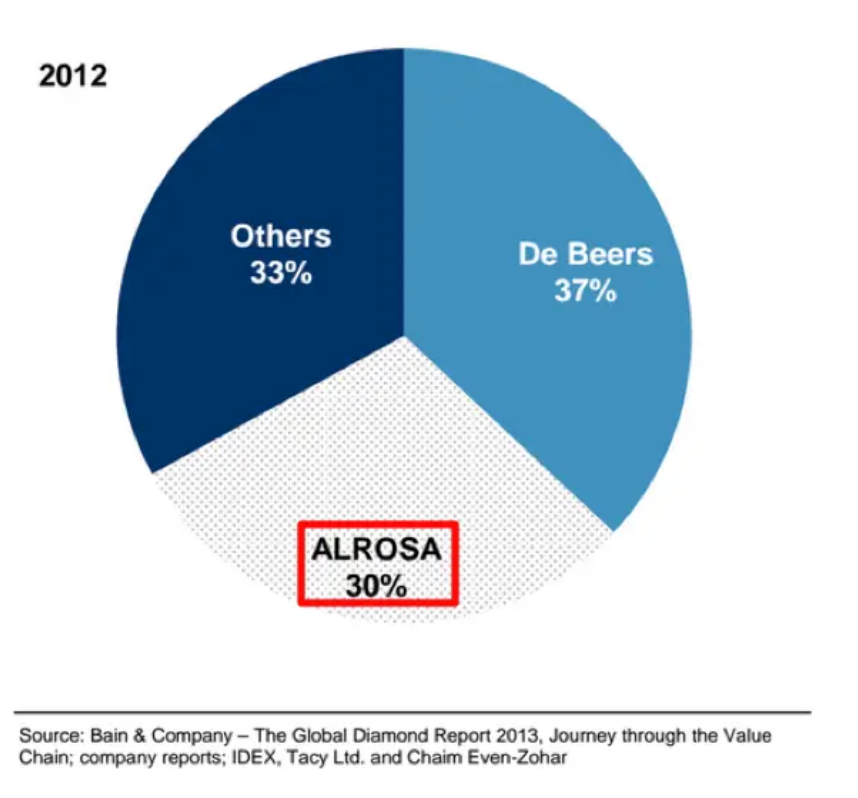
Part of the settlement was ensuring that De Beers would no longer distribute the approximately one third of the world supply of rough diamonds originating from Russia (Alrosa), constituting approximately one third of all supply. With De Beers itself owning approximately one third of the supply, the idea was that this would address the critical part of an abuse of monopoly: overcharging consumers.

2012 pie chart labeled De Beers 37%, ALROSA 30%, and Others 33%, with the ALROSA label outlined in red.

The problem with that logic is that it assumed that Putin’s supply and De Beers’ would actually compete after De Beers no longer distributes them. They do not, it turns out, certainly not on price. The two have figured out how to couple prices just as much as if only one company sold all the supply.

Prices between created vs mined diamonds are in fact diverging -- and the delta between the mined and created diamond prices is exactly the cartel premium.

De Beers Centenary AG was criminally indicted in the U.S. for industrial-diamond price fixing. It is mistaken to assume that the De Beers-backed Natural Diamond Council, now “The Diamond Collective,” has cleaned up its act and is today honest and truthful in its marketing.

Myth 16The Diamond Collective, aka The Natural Diamond Council, represents the diamond industry.
TruthIt is controlled by De Beers and solely represents African diamond mining interests.

Then as a matter of fact, African diamond mining interests often run afoul and against the interests of U.S. consumers.

The Diamond Collective is the new public identity of the Natural Diamond Council, formerly the Diamond Producers Association. Although it presents itself as a broad industry organization, its UK corporate filings identify De Beers UK Limited as a “Person with Significant Control,” specifically on the basis that De Beers exercises “significant influence or control” over the organization.

De Beers has also historically been its dominant funder. The organization's new governance model gives enhanced voting rights to larger contributors, with contributors of at least $4 million receiving “A” voting rights. De Beers committed $8 million in the latest disclosed funding round. Angola's ENDIAMA and SODIAM have also committed a combined $8 million and now hold two board seats. ProPublica The organization's U.S. entity reported $22.7m of 2024 revenue, illustrating just how large those two commitments are relative to its recent operating scale. In 2023, the Natural Diamond Council also appointed De Beers' Chief Brand Officer as chairman of its board. [Natural Diamond Council — Companies House filing history; Natural Diamond Council — Companies House company record]

Thus, while The Diamond Collective has broadened its membership, De Beers remains the only entity presently identified in the UK corporate register as exercising significant influence or control over the legal entity.

Now De Beers does not have a clean U.S. law record, not even in recent decades. They have been criminally indicted and paid maximum penalties as recently as 2004.

On February 17, 1994, a U.S. federal grand jury criminally indicted De Beers Centenary AG under §1 of the Sherman Act. This wasn't merely a civil antitrust complaint. The DOJ classifies the proceeding as a criminal case for horizontal price fixing.

De Beers initially wasn't tried because the U.S. court lacked jurisdiction over the Swiss company. A decade later, on July 13, 2004, De Beers Centenary AG pleaded guilty. According to the DOJ, De Beers admitted reaching agreements with its co-conspirator to raise list prices and admitted that its representatives exchanged detailed future pricing information. The court imposed the then-maximum $10 million criminal fine. [DOJ: De Beers guilty plea and $10 million criminal fine]

Myth 17Boston Consulting Group (BCG), S&P Global, Bain & Co, GIA, CIBJO, JVC, JCK offer independent and unbiased information about and represent the diamond industry truthfully.
TruthThey all fabricate pro-mining messaging in coordination with De Beers.GIA, CIBJO, and “independent” analysts are all pro-mining advocates with their livelihoods supported or directly paid by De Beers and its associations, often for decades so.Their interest is to profit from mined diamond sales. They do not have the best interests of the U.S. consumer in mind.

CIBJO: Natural Diamond Advocacy in Disguise

CIBJO is sometimes treated as though it were an independent international regulator of diamonds. It is not. CIBJO describes itself as the organization representing the jewellery industry from “mine to marketplace,” and its standards are voluntary industry standards.

That distinction matters in the debate over laboratory-grown diamonds.

The Natural Diamond Council—today The Diamond Collective—is itself a voting CIBJO member. De Beers executives have also occupied important positions inside CIBJO dealing with issues directly affecting the competition between mined and laboratory-grown diamonds.

A De Beers Consumer & Brands executive chaired CIBJO's Laboratory-Grown Diamond Committee. A senior De Beers executive chaired CIBJO's committee developing responsible-sourcing and sustainability terminology, while another De Beers sustainability executive served as committee lead. De Beers has also sponsored CIBJO's annual Congress.

CIBJO has simultaneously provided a forum for the natural-diamond industry to discuss how to stimulate consumer demand. It organized a session explicitly titled “Cultivating Demand for Natural Diamonds: How to Do It & Who Should Pay,” featuring senior representatives of De Beers and the Natural Diamond Council. More recently, CIBJO has hosted discussions about industry-wide strategies for strengthening natural diamonds.

This context is particularly important following CIBJO's 2026 decision to recommend that “synthetic” become the sole international descriptor for laboratory-grown diamonds—even though laboratory-grown diamonds have the same chemical composition, physical properties and crystal structure as mined diamonds and even though terms such as “laboratory-grown” remain legally accepted in markets including the United States.

CIBJO's Diamond Commission has gone further, advocating removal of “laboratory-grown” and “laboratory-created” from its preferred terminology and proposing that CIBJO explore restricting use of the familiar 4Cs grading framework to natural diamonds.

CIBJO is an industry organization whose membership, committees and policy discussions include—and in important instances have been led by—companies and organizations with substantial commercial interests in natural diamonds.

Its pronouncements concerning the terminology that competitors to natural diamonds should be permitted to use should therefore be understood for what they are: industry standards developed within an industry organization, not regulations issued by an independent government authority.

GIA + De Beers: Nearly a Century of Institutional Ties

GIA is commonly perceived as an independent authority standing apart from diamond miners. Its own historical records, however, reveal an unusually long and extensive relationship with De Beers—stretching almost to GIA's founding.

By approximately 1933, a director of De Beers and Affiliated Mines, H.T. Dickinson, was serving on GIA's Advisory Board. In other words, a De Beers director was advising GIA on its diamond curriculum within roughly two years of GIA's founding.

According to GIA's own historical account, “Beginning in 1940, GIA collaborated with De Beers to create advertising designed to stimulate an interest in diamonds.”

De Beers also supplied diamonds used in GIA's education. It provided GIA's Oppenheimer Student Collection beginning in 1938, donated 1,500 carats of rough diamonds in 1955, and made another major donation of diamond crystals in 1966 to support GIA's teaching of diamond grading and appraisal. GIA today recognizes De Beers among donors that have cumulatively contributed between $500,000 and $999,999 in non-cash gifts.

The relationship extended to marketing. GIA's own history states that, beginning in 1940, “GIA collaborated with De Beers to create advertising designed to stimulate an interest in diamonds.” De Beers' U.S. advertising organization subsequently helped teach American jewelers how to communicate GIA's emerging 4Cs framework to consumers.

The two institutions then jointly addressed the lab grown diamond “threat”. The relationship later became more deeply scientific. A former De Beers Diamond Research Laboratory researcher, D. Vincent Manson, became GIA's Director of Research in 1976 and established GIA's expanded research facility. De Beers later supplied GIA researchers with experimental laboratory-grown diamonds for landmark identification studies. GIA itself has described De Beers as having “worked closely with GIA” on synthetic-diamond research.

The institutional connections continue today. In January 2024, former De Beers CEO François Delage joined GIA's Board of Governors. Delage had been CEO of De Beers Jewellers, 2009–2020 and CEO of De Beers' Forevermark diamond brand.

GIA and De Beers are not institutions whose paths merely happen to cross. Their cooperation spans more than 90 years and has included governance advice, diamond donations, consumer marketing, education, personnel, scientific research, laboratory equipment, provenance infrastructure and, today, a shared corporate investment.

BCG Boston Consulting Group: The Mercenary Enabler

BCG has a significant and unusually substantive relationship with De Beers and the natural-diamond industry.

Boston Consulting Group is frequently cited as an authoritative source of research concerning the future of natural diamonds. Consumers and journalists evaluating such research should understand BCG's extensive commercial relationship with the natural-diamond industry—and particularly with De Beers.

The widely circulated 2024 BCG report, “The Future of the Natural Diamond Industry,” was not simply an independent BCG study about diamonds. It was a BCG–De Beers production under BCG’s name. De Beers itself directs readers to the “BCG report” from its investor/strategy materials, and De Beers' 2024 presentation reproduces BCG's analysis of natural-diamond demand, synthetic substitution, supply, scarcity and long-term pricing.

When BCG research about natural diamonds is cited, readers should therefore ask a simple question: Is this independent research about the natural-diamond industry—or research produced with, for, or in commercial collaboration with participants in that industry?

BCG now adds the world’s most thorough disclaimer to its reports – we wonder why – pointing out in fine print that it is commissioned by De Beers Group, that none of the info in it may be true or has been verified, that no reader should rely on any part of it, and that primarily BCG has no liability whatsoever and that any reader waives any and all rights reading the report:
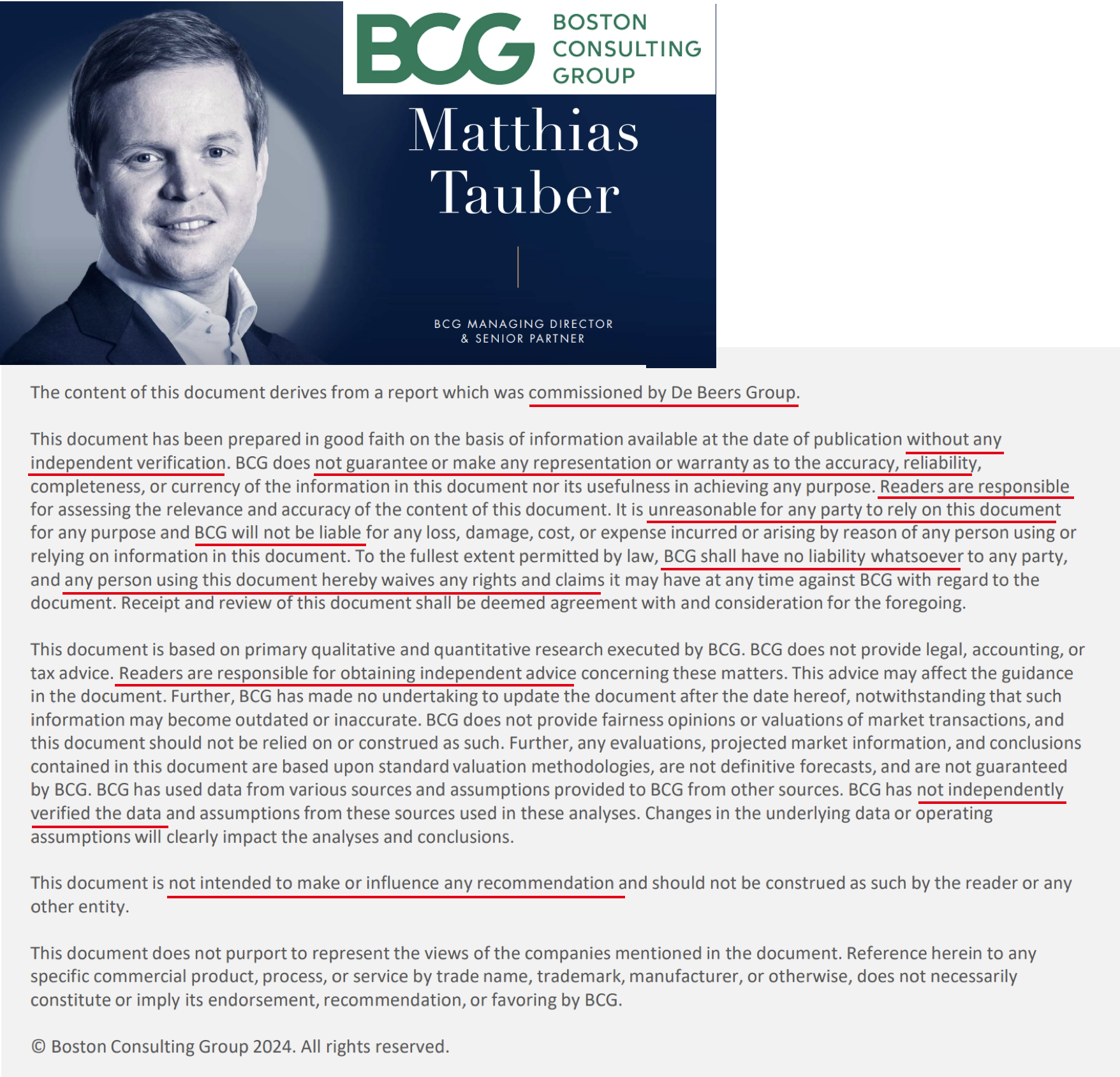
Composite of a BCG portrait graphic labeled Matthias Tauber and a report disclaimer with passages underlined in red.

Individuals such as BCG Managing Directors Matthias Tauber and Adrian Rodrigues are the mercenary enablers – no longer hidden – of the mirror & deception in the diamond industry. They profit by saying anything their clients want them to say – and their legal counsel knows how to craft the world’s most comprehensive disclaimers.

Ironically, in Sept 2024, the BCG Boston Consulting Group formally admitted to corruption over the real blood diamonds effectively. Open Secrets — Unaccountable #39: BCG, Consultant to Kleptocrats

BCG has had substantial commercial relationships both in Angola and with De Beers; U.S. authorities found that misconduct by BCG personnel and an intermediary in Angola involved payments reaching government officials; BCG surrendered $14.424 million in resulting profits; and BCG later became deeply involved in developing the natural-diamond industry's provenance infrastructure and strategic narrative.

When BCG research is cited to consumers as evidence about the scarcity, sustainability, provenance or future value of natural diamonds, those commercial relationships are relevant context—and should be disclosed.

In 2024, the U.S. Department of Justice disclosed the results of an investigation into BCG's activities in Angola, one of the world's important diamond-producing countries. According to the DOJ, between approximately 2011 and 2017, BCG's Portugal office paid approximately $4.3 million in commissions to an agent in Angola to help BCG obtain business from Angolan government agencies.

The DOJ found that the agent shared a portion of those commissions with Angolan government officials associated with the Ministry of Economy to help BCG obtain contracts.

The misconduct went further. According to the DOJ, certain BCG employees took steps to conceal the arrangement when questions arose internally, including backdating contracts and falsifying the agent's purported work product.

BCG ultimately obtained eleven contracts with Angola's Ministry of Economy and another with the National Bank of Angola. Those contracts generated approximately $22.5 million of revenue and $14.424 million of profit for BCG.

BCG avoided indictment and conviction under the U.S. DOJ’s corporate-enforcement policy after considering BCG's voluntary self-disclosure, cooperation and remediation. As part of the resolution, BCG agreed to disgorge the entire $14.424 million in profits associated with the conduct.

Bain & Company

For more than a decade, reports from Bain & Company have been widely cited by journalists, investors and the diamond industry as authoritative analysis of natural-diamond supply, demand, pricing, scarcity and laboratory-grown diamonds.

Bain & Company produced its widely read diamond industry reports often in association with the Antwerp World Diamond Centre. These reports provided a seeming “third party”, “independent” view of De Beers’ messaging of diamond supply scarcity, etc. It concludes “New natural diamond supply remains limited.”
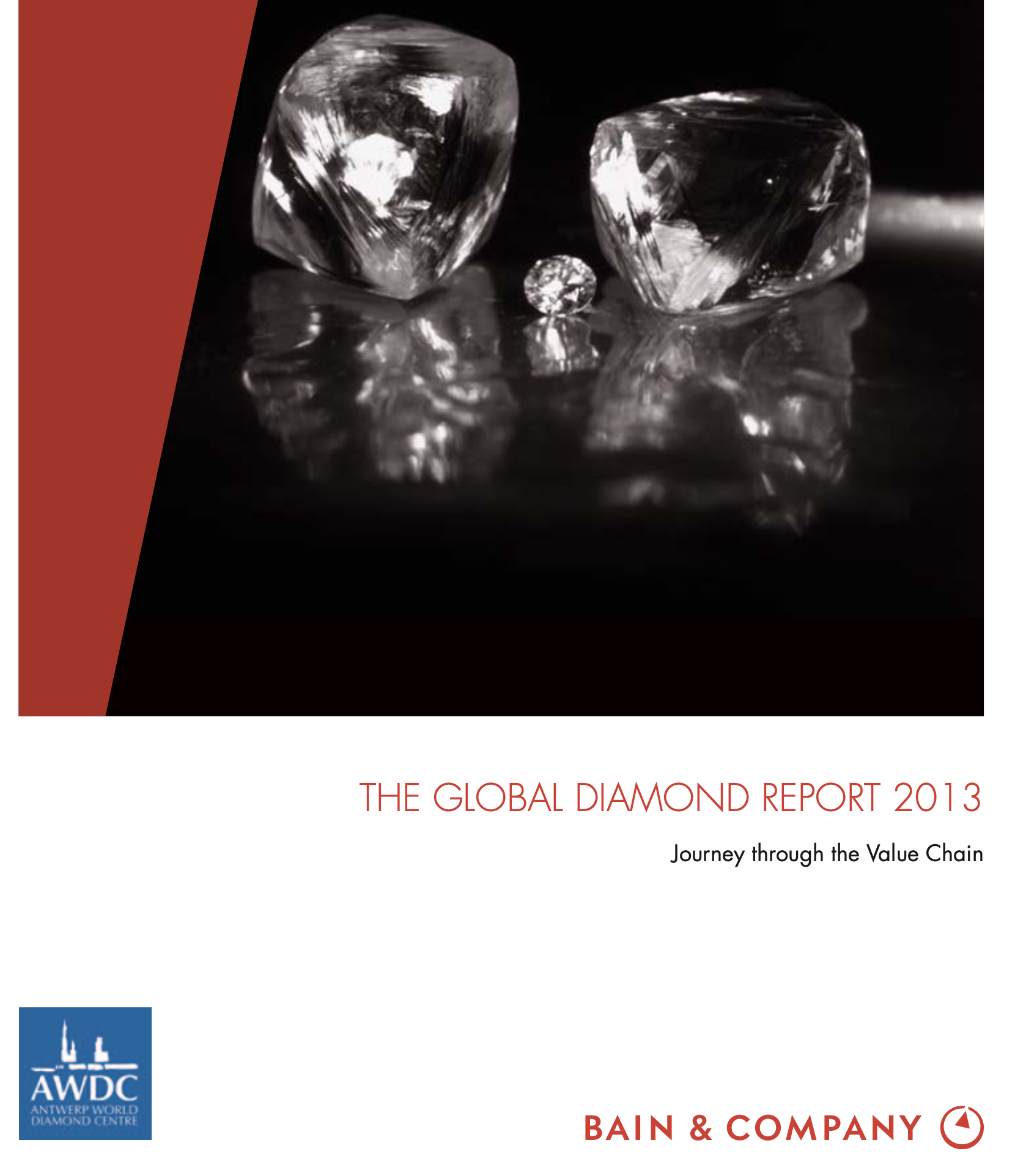
Cover of The Global Diamond Report 2013: Journey through the Value Chain, with rough and polished diamonds and AWDC and Bain & Company logos.

Bain was not merely an outside observer of the diamond industry. It had previously been hired by De Beers to help fundamentally redesign De Beers itself.

A forecast prepared for the natural-diamond industry's principal trading organization should not automatically be presented to consumers as though it were independent academic evidence about the future scarcity or investment value of natural diamonds.

S&P Global. Paid by Natural Diamond Council to Fabricate A Misleading Study with Comical Errors and Bad Faith

The Natural Diamond Council’s Trucost study that it paid S&P Global, the purveyor of the S&P 500 index, to fabricate contains numerous egregious errors including:

  • The main sources cited by S&P Global’s study are a jewelry journalist and a jeweler who each quote hearsay, not any experts in environmental impact assessment of semiconductor grade manufacturing.
  • None of the largest producers – neither Diamond Foundry nor Natural Diamond Council member De Beers’ own lab diamond unit – were asked for data about the modern state of diamond manufacturing. Instead, the study references decades-old technology from industry pioneers no longer even in business.
  • The study contains made-up math including averaging energy consumption data from no longer existing producers, averaging over the number of citations rather than production volume, and omitting data from the most innovative and largest producers.
  • The study omits that leading producers like Diamond Foundry use hydropower with zero emissions (and on top of that additionally offset carbon as if it were not).

The Trucost study cites articles by Rob Bates and Jason Payne. We love both Rob and Jason – as a jewelry trade journalist and a jeweler, respectively. But they are not a qualified “source” for semiconductor grade manufacturing technology and its environmental impact.

Rob Bates’ article refers to hearsay, quoting one “grower” who says he heard from another grower that at some point in the past some amount of energy was used. Jason Payne is quoted on numbers that are similarly just hearsay.

The two most substantive reports referenced are an ABN Amro report written in 2011 and a “working paper” from Saleem Ali.

The ABN Amro report refers to the first lab-grown diamond pioneers Gemesis and Apollo, long out of business for a reason. Their technology was first-generation, created two decades ago, true laboratory style. The Saleem Ali working paper cites the same two pioneers, Apollo and Gemesis, with numbers of 28kWh per carat and 20kWh per carat respectively. The TruCost study conveniently omits these key data points when “averaging” the available data points to 727kWh.

S&P Global made no inquiry with Diamond Foundry and not with its own key member De Beers’ own subsidiary Element Six. (De Beers is a part of the Natural Diamond Council / the Diamond Collective – they commission the study yet do not get your own tech unit to contribute data?)

S&P Global uses false math to average the energy consumption numbers from producers that no longer exist while omitting the metrics from the most innovative and largest producers.

The Natural Diamond Council and S&P Global make a major marketing statement with an impact study based on hearsay from jewelers, decades-old technology data, and flaky math.

For precise detail, here is the Appendix data that the entire S&P Global study paid for by the Natural Diamond Council boils down to:
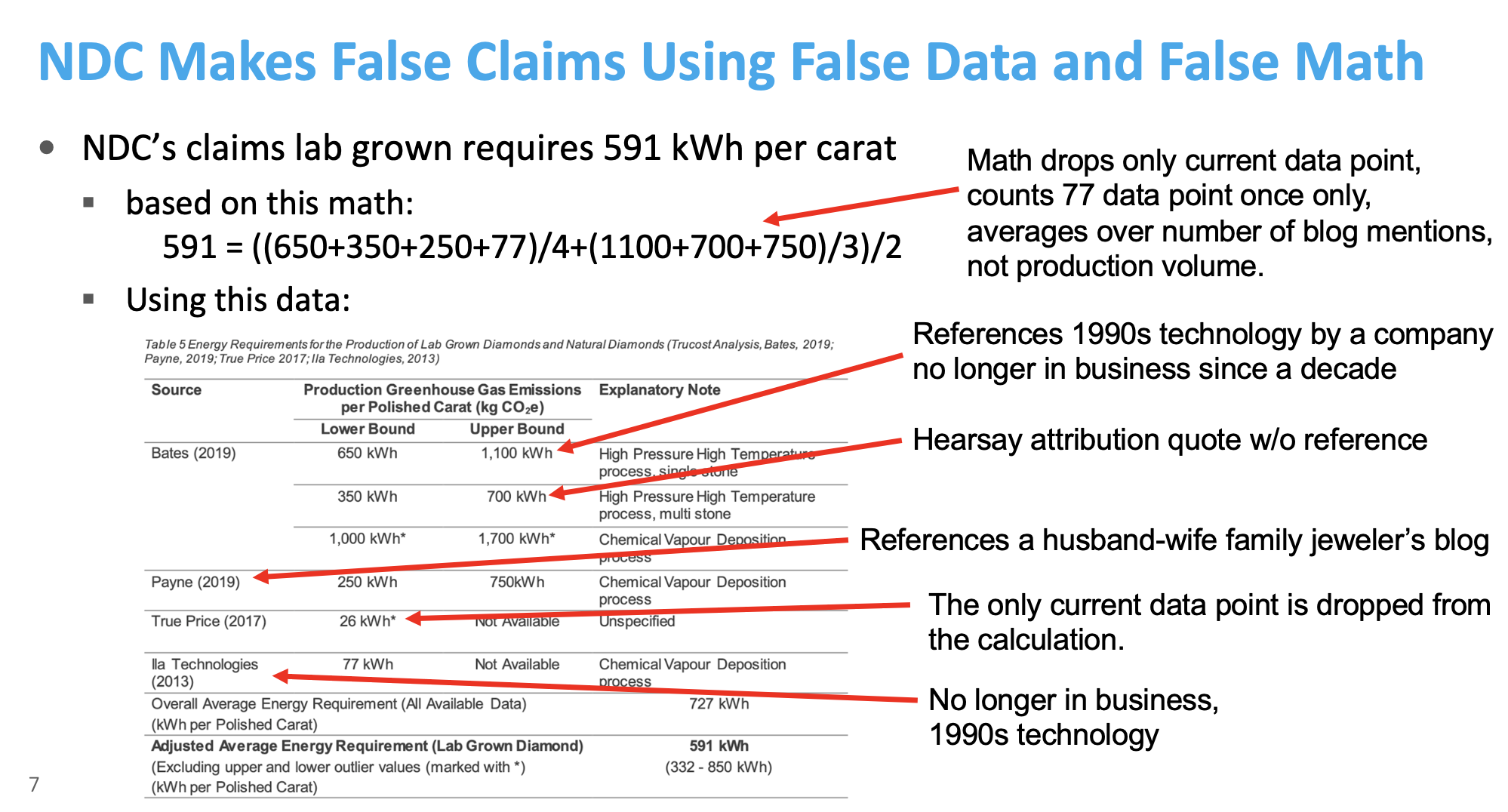
Annotated slide titled “NDC Makes False Claims Using False Data and False Math,” with an energy-requirements table, a 591 kWh calculation and red arrows pointing to source and averaging notes.

Of this table, Bates (2019) is a jewelry article that 1.) references the 650-1,100kWh number from hearsay and without attribution but specifically points out that this refers to outdated technology and that modern presses may achieve 350-700kWh; 2.) references the 60–120 kWh per rough carat for CVD technology, again from hearsay and without attribution, and somehow extrapolates this to 1,000–1,700 kWh per polished carat even though the factor between polished and rough is at most a factor of four, certainly not more than 16.

Payne (2019) quotes 250kW from hearsay without further attribution.

True Price references 26kWh as a reference to a real producer, albeit one decades ago and no longer in business. (Newer technology would be more energy efficient.)

S&P Global now proceeds to include the outdated high numbers, disregard the only actual (and smallest) reference number, and average this into 591kWh by omitting the low IIa number from the Upper Bounds and counting the high Payne/Bates numbers twice.

If it weren’t so egregious, we would actually find it quite funny the extent to which S&P Global fudges data and math. This would be like Microsoft creating a billboard advertising the Microsoft phone as one million times faster than Apple’s -- without disclosing that the one million factor is relative to an Apple II computer instead of the iPhone on the market today and that Apple II data comes from averaging blog mentions, not any real data.

Of course, there is nothing funny about bad faith and being misleading and deceptive.

The U.S. Ruling: Natural Diamond Council Engaged in Misleading Marketing with TruCost Study Fabricated by S&P Global

The National Advertising Division (NAD), the U.S. advertising industry’s independent self-regulatory body, in 2021 found that diamond miners claiming that lab-grown diamonds cause three times the carbon emissions of mined diamonds was not backed by any reliable evidence. It also found that the broader implied claim of overall environmental superiority made by miners was unsupported by any evidence.

The decision determined that the carbon-emission comparison in the Trucost study contained “several flaws.”

First, it did not collect data directly from the leading lab-grown manufacturers and relied on “second and third-hand” information.

“[Mining c]ompanies providing information directly to Trucost had the ability and opportunity to vet such data while [lab-grown] manufacturers likely did not have any input on certain information as it was conveyed through second and third-hand sources, or the opportunity to correct for faulty assumptions,” the NAD said.

The NAD also found that the report used old data, and failed to note some lab-grown companies now use renewable energy. Its calculations also excluded “significant stages of the mining process,” including exploration, mine closure, and cutting and polishing, the group said.

In addition, “NAD was concerned that [such] claims conveyed a broader implied message about the overall environmental benefits of mined diamonds versus man-made diamonds, a message that was not supported,” it said.

Myth 18The Diamond Collective, aka The Natural Diamond Council, engages in truthful marketing.
TruthThe U.S. advertising industry’s own watchdog has already recommended that the Natural Diamond Council stop making a series of unsupported claims about laboratory-grown diamonds.

The National Advertising Division (NAD) of BBB National Programs—the U.S. advertising industry’s independent self-regulatory body—in 2021 reviewed advertising by the Natural Diamond Council (NDC), an organization representing major mined-diamond producers.

The result was significant: NAD recommended that Natural Diamond Council discontinue multiple claims concerning laboratory-grown diamonds and the supposed advantages of mined diamonds. Natural Diamond Council agreed to comply with NAD's recommendations.

1. Claim: “Natural diamonds produce 3× less carbon emissions than lab-grown diamonds.”

Natural Diamond Council advertised claims including that laboratory-created diamonds produced approximately three times the carbon emissions of mined diamonds.

NAD examined the evidence and concluded that Natural Diamond Council’s evidence was not sufficiently reliable to substantiate the comparative carbon-emissions claims.

NAD went further. It found that the advertising could communicate a broader message that mined diamonds are environmentally preferable to laboratory-grown diamonds—and found that broader message unsupported as well.

NAD therefore recommended discontinuing both the specific comparative carbon claims and the implied claim that mined diamonds are better for the environment than man-made diamonds.

2. Claim: Natural diamonds are becoming “rarer every day.”

Natural Diamond Council also promoted scarcity claims suggesting consumers should buy natural diamonds because supply was rapidly disappearing.

NAD concluded that NDC did not have a reasonable basis for its increasing-scarcity claims and found that the advertising could create an unsupported sense of urgency: consumers might believe they risked being priced out of natural diamonds unless they purchased now.

NAD recommended discontinuing claims including that diamonds were becoming rarer every day and that no meaningful new discoveries had occurred for decades.

There is an important distinction here. A marketer can truthfully explain that natural diamonds are a finite geological resource. What it cannot do is convert that general fact into specific claims about declining availability, future prices or purchase urgency without adequate substantiation.

3. Claim: Lab-grown diamonds have “no resale value.”

Natural Diamond Council also made categorical statements about the resale value of laboratory-grown diamonds.

NAD found the comparative message unsupported and recommended that NDC discontinue claims including that laboratory-created diamonds had “no resale value” and similar assertions that they had little or no resale value because they could be produced again.

Diamond prices can rise or fall. Secondary-market values can vary enormously depending upon the stone, seller, buyer, market conditions and transaction channel. Those are empirical questions—not facts that an industry association should simply declare in advertising without adequate evidence.

Consumers should also distinguish resale value from investment return. A diamond having a secondary-market price does not mean that buying either a mined or laboratory-grown diamond is an investment with a predictable return.

4. Claim: Mined diamonds are “real diamonds,” implying lab-grown diamonds are not.

Perhaps the most fundamental issue concerned the word “real.”

Natural Diamond Council advertising contrasted laboratory-grown diamonds with what it called “real diamonds.”

NAD concluded that, in context, this conveyed an unsupported message that laboratory-grown diamonds have different physical and chemical properties from mined diamonds and could cause consumers to confuse laboratory-grown diamonds with simulants such as cubic zirconia or moissanite.

NAD therefore recommended that Natural Diamond Council discontinue the implied claim that laboratory-grown diamonds are not “real” diamonds.

This is consistent with an important distinction in the FTC's Jewelry Guides.

A laboratory-grown diamond is a diamond with essentially the same optical, physical and chemical properties as a mined diamond. It is not the same category as a diamond simulant. The FTC specifically permits terms such as “laboratory-grown diamond” and “laboratory-created diamond” for products having essentially the same optical, physical and chemical properties as mined diamonds.

The meaningful distinction is therefore origin:

Mined diamond: formed geologically and extracted from the earth.

Laboratory-grown diamond: diamond created through a technological manufacturing process.

Diamond simulant: a different material made or selected to resemble diamond.

Conflating the last two categories can mislead consumers.

Marketing becomes problematic when it:

  • Creates a false distinction between “real” diamonds and laboratory-grown diamonds in a context suggesting that LGDs are fake stones or simulants. NAD specifically recommended that Natural Diamond Council discontinue that message.
  • Makes categorical environmental comparisons without adequate substantiation. NAD rejected Natural Diamond Council’s challenged “3×” carbon comparison, while FTC guidance separately cautions marketers against broad environmental claims that they cannot substantiate.
  • Manufactures purchase urgency through unsupported scarcity claims. NAD found insufficient support for Natural Diamond Council’s challenged claims that natural diamonds were becoming “rarer every day.”
  • States speculative market outcomes as facts, such as categorical claims that an entire category of diamonds has “no resale value.” NAD recommended discontinuing Natural Diamond Council’s challenged resale-value claims.
Myth 19Diamond miners represent the diamond jewelry’s interests.
TruthDiamond miners represent mining interests. Jewelers beware.

As a jeweler, you are selling creations and just want to use the components with the best provenance. Know the origin.

Myth 20A mined diamond is the only diamond with a meaningful story.
TruthA diamond’s meaning comes from the person, occasion, and design.

Its origin is part of its story—and the ingenuity of growing diamond aboveground, often with renewable energy, with your consumer dollars supporting a modern diamond industry with healthy and well-paying jobs is a good one.

Choose the origin. Love the diamond.

A diamond solitaire ring worn on a relaxed hand resting on ivory linen

Additional perspectives

  • “Manmade diamonds are diamonds.”

    Federal Trade Commission, August 2018
  • “Mined diamonds are a gift of nature whereas man-made diamonds are a gift of human wisdom.”

    Qiang Lin, President, Shanghai Diamond Exchange
A jeweler examining a loose diamond with tweezers at a bright workbench

For retailers and journalists

Clear information. Better conversations.

Understand the claims made about laboratory-grown diamonds and the facts behind them.

News · October 20, 2026 · 9:00 a.m. EDT

Diamond Producers Council Advises Jewelers to Reject CIBJO’s Biased and Deceptive “Synthetic” Terminology Recommendation

The Diamond Producers Council (DPC) rejects a recommendation by the World Jewellery Confederation (CIBJO) to use “synthetic” as the sole descriptor for lab-grown diamonds and colored gemstones in its Blue Books.

The DPC Dispatch · October 6, 2026

Sarah Jessica Parker sees diamonds

Sarah Jessica Parker looks at Astrea London’s collection and sees beautiful diamonds. The jewelry gets to be judged on its own merits.